Signs of Termites in Your House | Leaf Pest
October 15, 2026
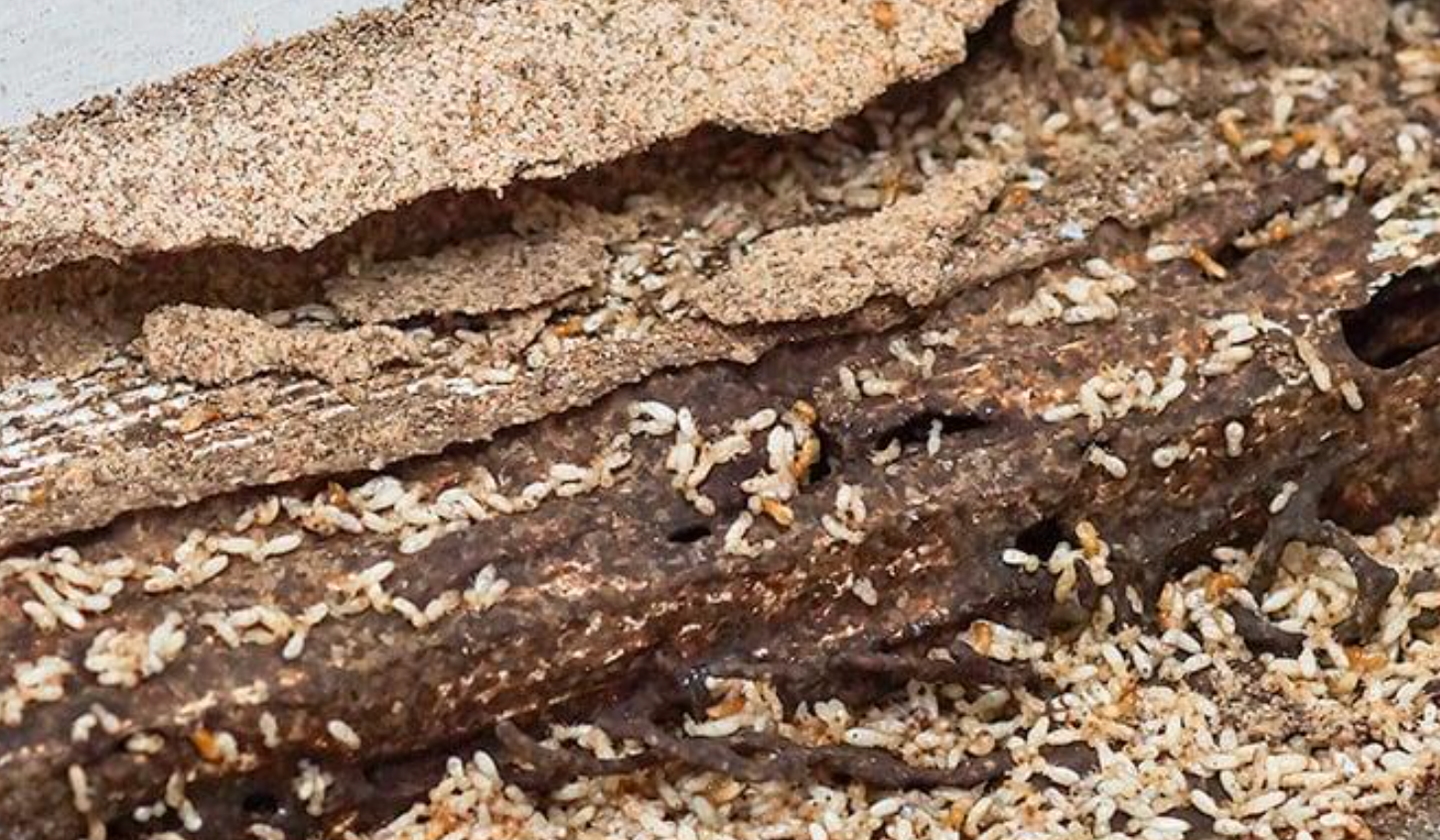
Termites can damage a home long before homeowners recognize a problem. Unlike ants, cockroaches, or rodents, termites often remain hidden inside walls, wooden framing, foundations, and other structural components. By the time obvious damage appears, an infestation may have been developing for years.
For homeowners throughout Los Angeles and Ventura counties, understanding the early warning signs of termites can help prevent extensive repairs and unnecessary expenses.
According to the National Pest Management Association (NPMA), subterranean termites alone cause an estimated $5 billion in structural damage annually across the United States. Although this is a national estimate rather than a figure specific to Southern California, it illustrates why early detection matters.
The good news is that termites frequently leave clues. Knowing what to look for, where to inspect, and when to contact a professional can make a significant difference.
Why Termites Are a Concern for Southern California Homes
Southern California's climate supports several termite species that can damage residential and commercial structures. Homeowners in Thousand Oaks, Westlake Village, Agoura Hills, Calabasas, Newbury Park, and nearby communities may encounter termite activity in both new and older buildings.
The University of California's Integrated Pest Management (UC IPM) program identifies three primary termite groups found in California: subterranean, drywood, and dampwood termites. Each has different nesting habits, moisture requirements, and warning signs.
Subterranean termites generally live underground and enter structures through soil or protective mud tubes. They can damage framing, subfloors, and other wooden components while remaining largely invisible.
Drywood termites establish colonies directly inside wooden structures without needing soil contact. They are particularly relevant to Southern California, where they can infest framing, attic timbers, windows, doors, fences, and furniture.
Dampwood termites are associated with wood containing substantial moisture, often from leaks or prolonged exposure to damp conditions.
UC IPM reports that mature subterranean colonies can contain hundreds of thousands of termites, while drywood colonies usually contain fewer than 1,000 individuals. Despite their smaller populations, drywood termites can still cause substantial damage when infestations remain undetected.
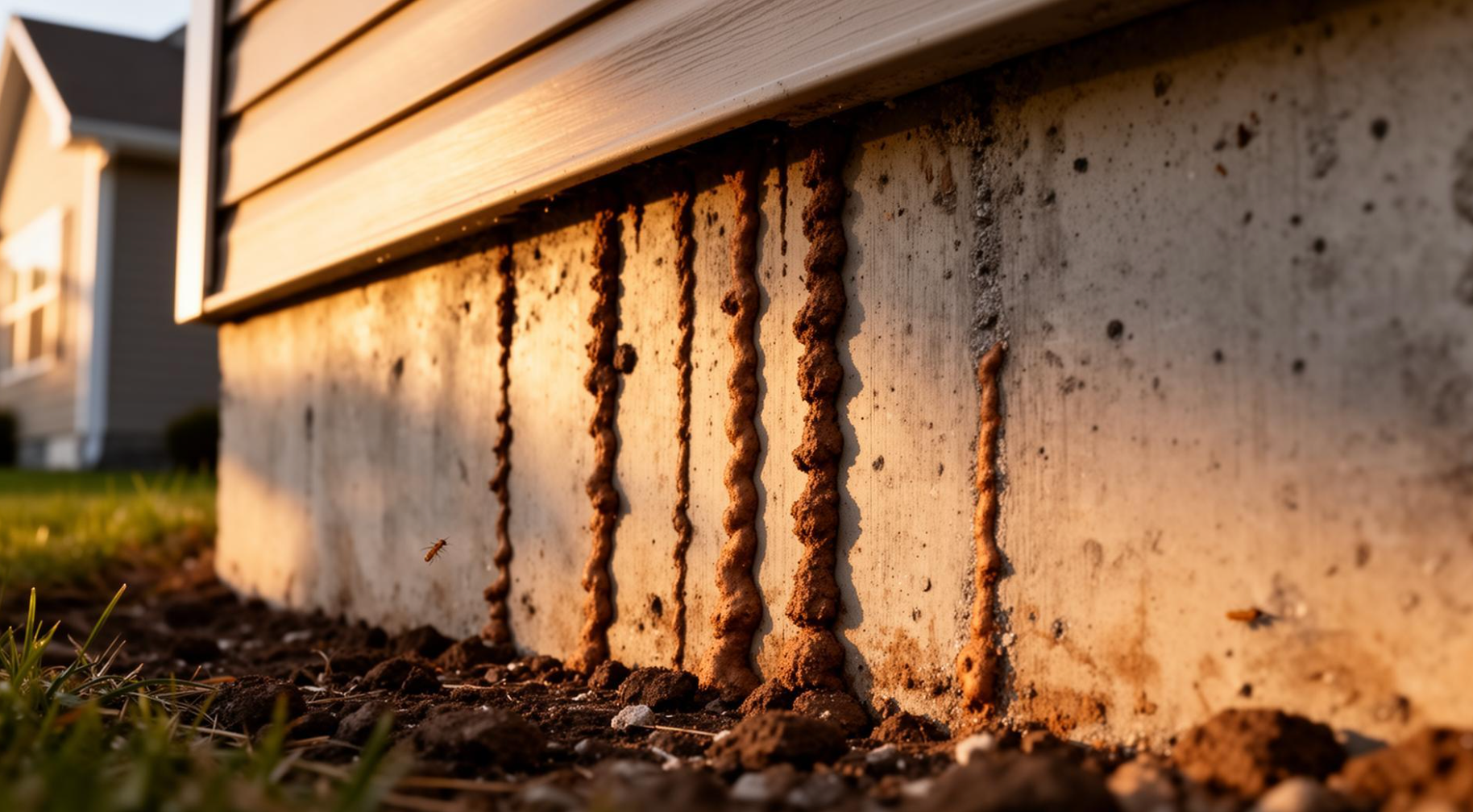
7 Early Warning Signs of Termites in Your House
1. Mud Tubes Along Foundations and Exterior Walls
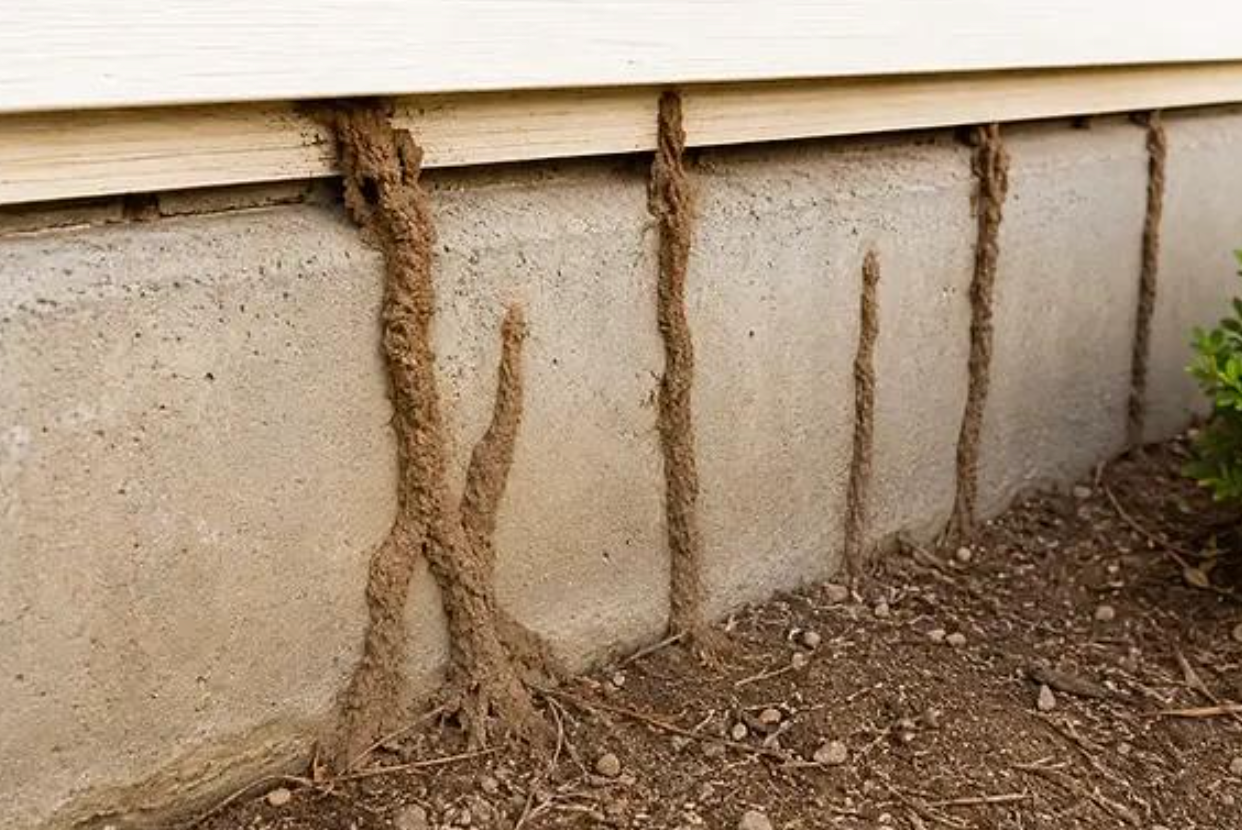
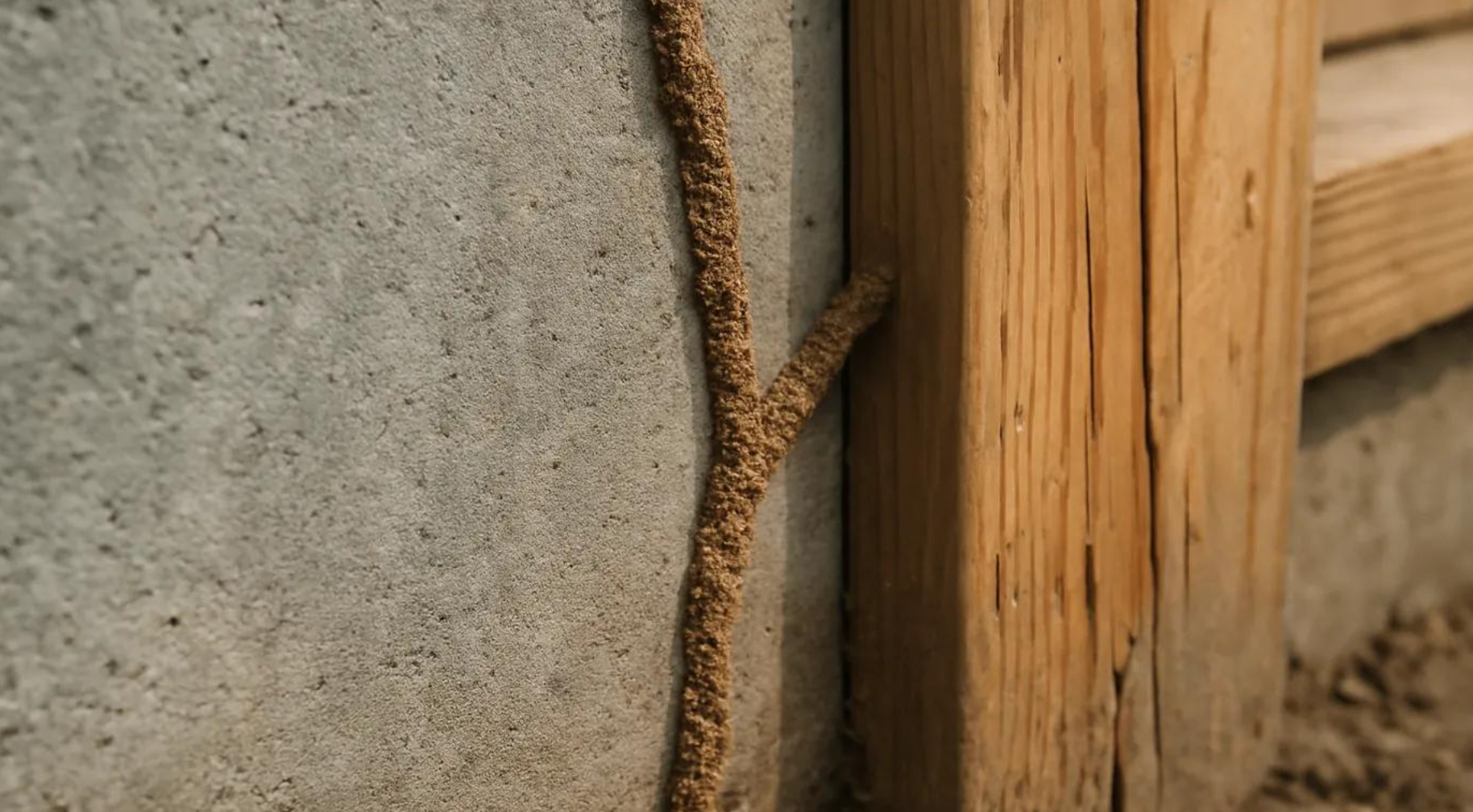
Mud tubes are among the clearest indicators of subterranean termite activity. These narrow, soil-colored passageways provide protected routes between underground colonies and wooden structures.
Homeowners may notice mud tubes along concrete foundations, crawlspace walls, garage interiors, or areas where soil meets the building. The tubes may look like dried dirt or small, irregular lines extending vertically across a surface.
According to UC IPM, subterranean termites build these passages using soil, saliva, and other materials to protect themselves while moving between locations.
Finding a mud tube does not automatically establish whether an infestation remains active, but it is strong evidence that professional investigation is warranted.
2. Discarded Termite Wings Near Windows and Doors
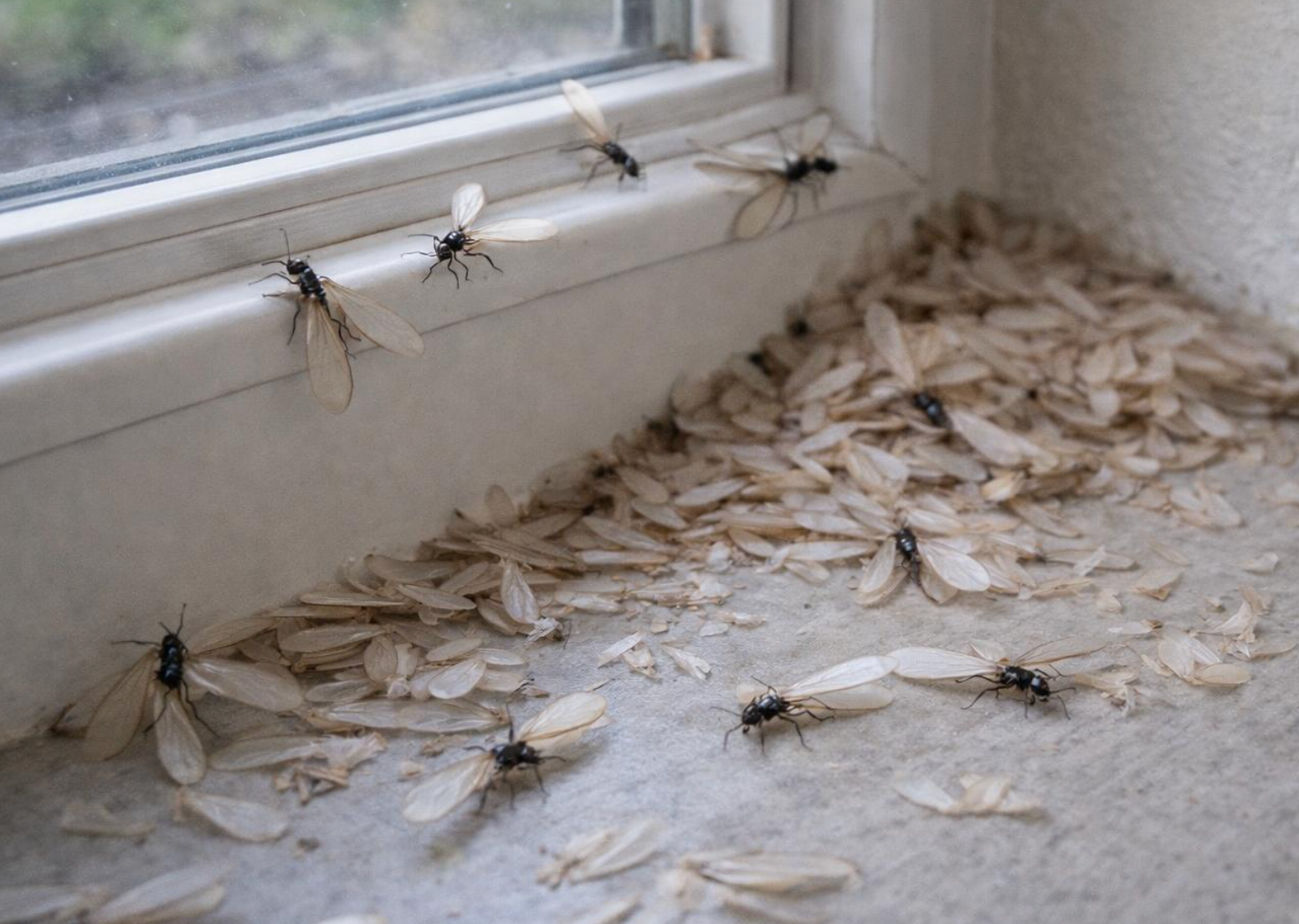
One of the earliest visible signs of termite activity is a collection of discarded wings around windowsills, sliding doors, garage entrances, or interior lighting.
Termite swarmers are reproductive adults that leave established colonies to find mates and establish new colonies. After landing, they shed their wings, sometimes leaving noticeable accumulations.
Our history serving homes and businesses in LA and Ventura Counties shows that subterranean termites may swarm in spring or fall after rain, while western drywood termite swarms commonly occur in summer and fall.
A swarm outside your house does not necessarily mean the structure is infested. However, finding repeated swarms or discarded wings indoors deserves closer examination.
3. Small Piles of Termite Droppings
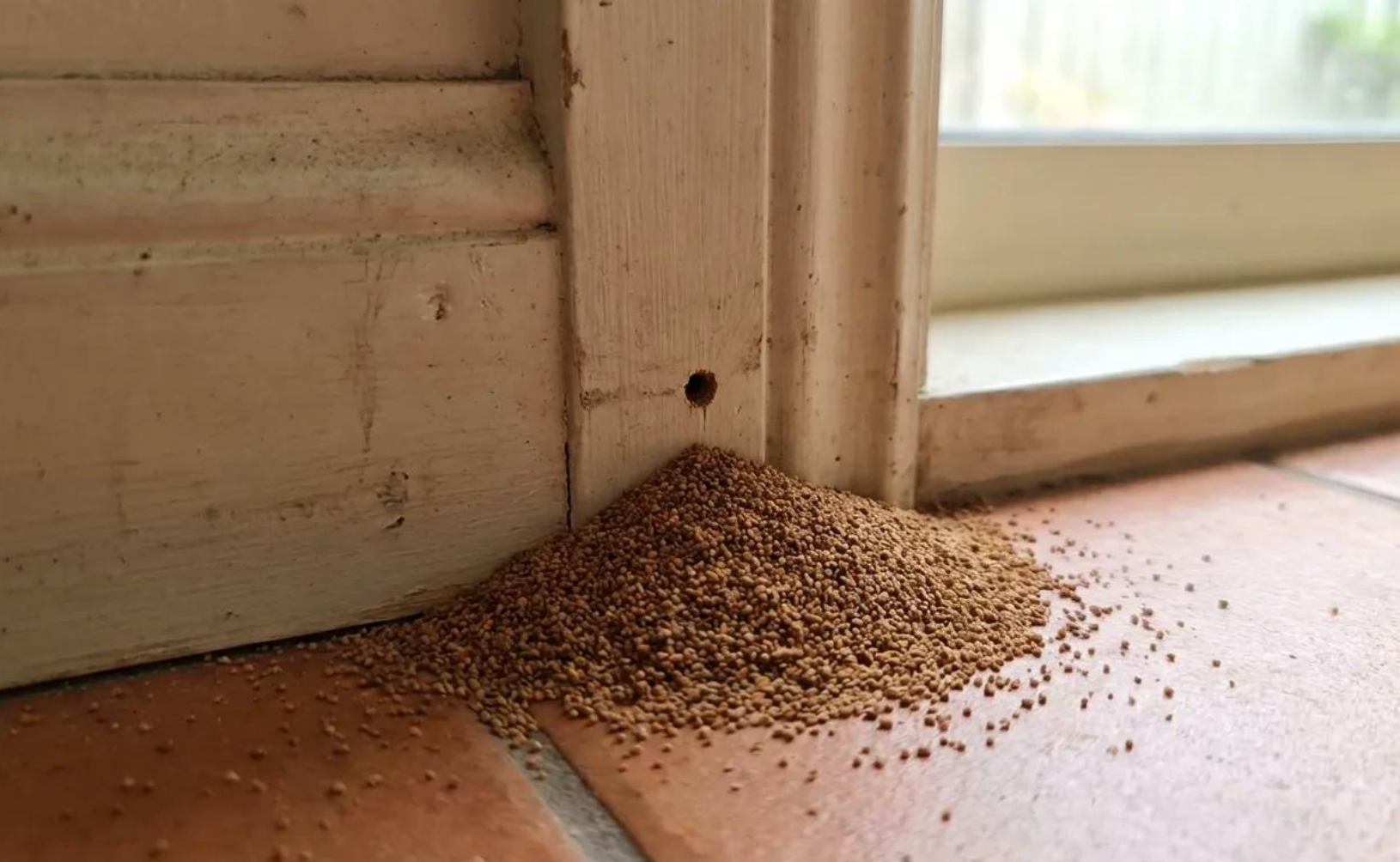
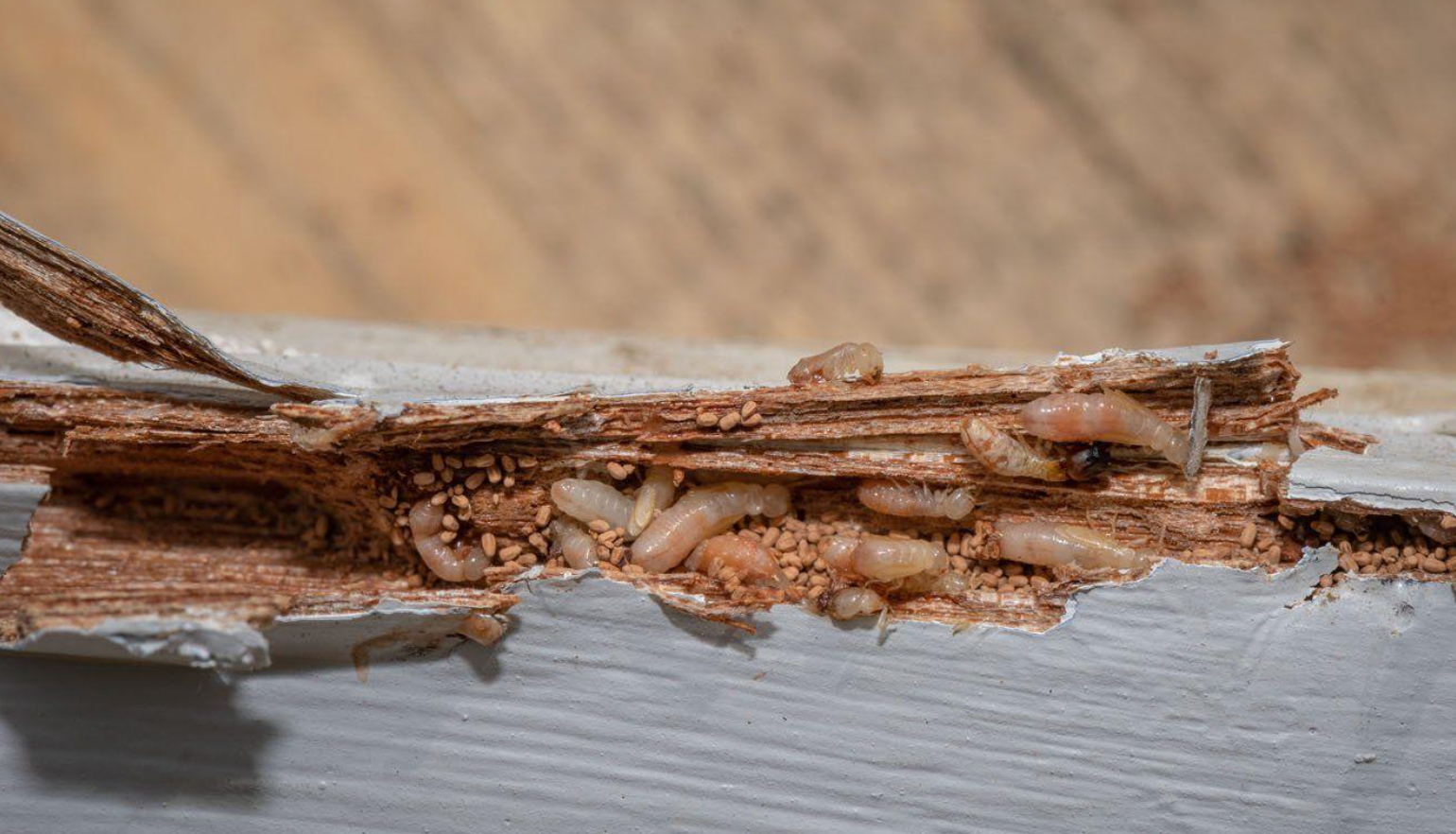
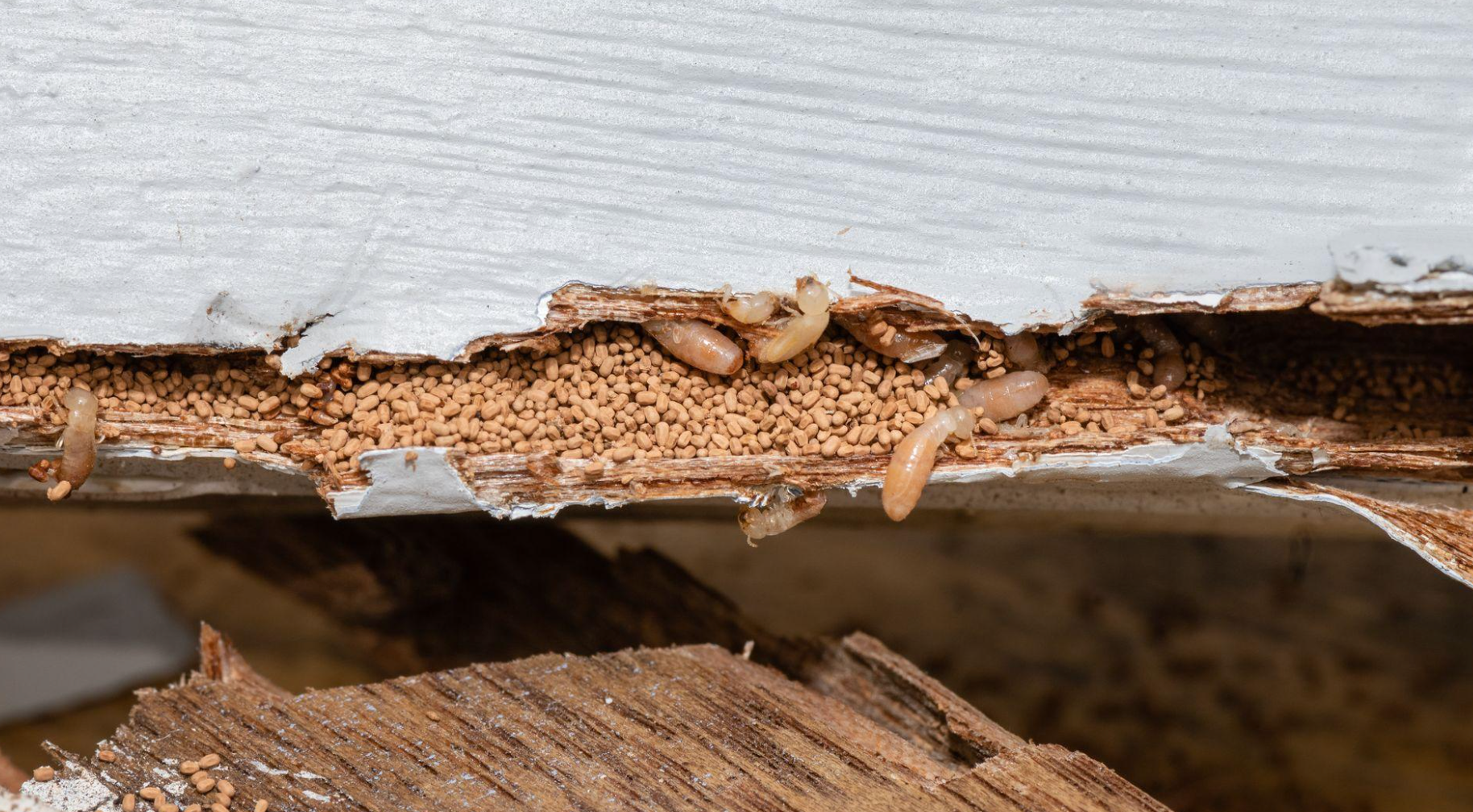
Drywood termites produce small, hard fecal pellets known as frass. These pellets can accumulate beneath infested wood and are sometimes mistaken for sawdust, sand, or debris.
Homeowners should inspect window frames, baseboards, wooden cabinets, attic beams, and furniture for small piles of similarly sized pellets.
UC IPM explains that drywood termite pellets have six flattened sides and are commonly expelled through tiny openings in infested wood. These exit points are sometimes called kick-out holes.
Importantly, finding frass alone does not establish whether a colony is currently active. A professional inspection helps determine the source, extent, and likely condition of the infestation.
4. Hollow-Sounding or Weakened Wood
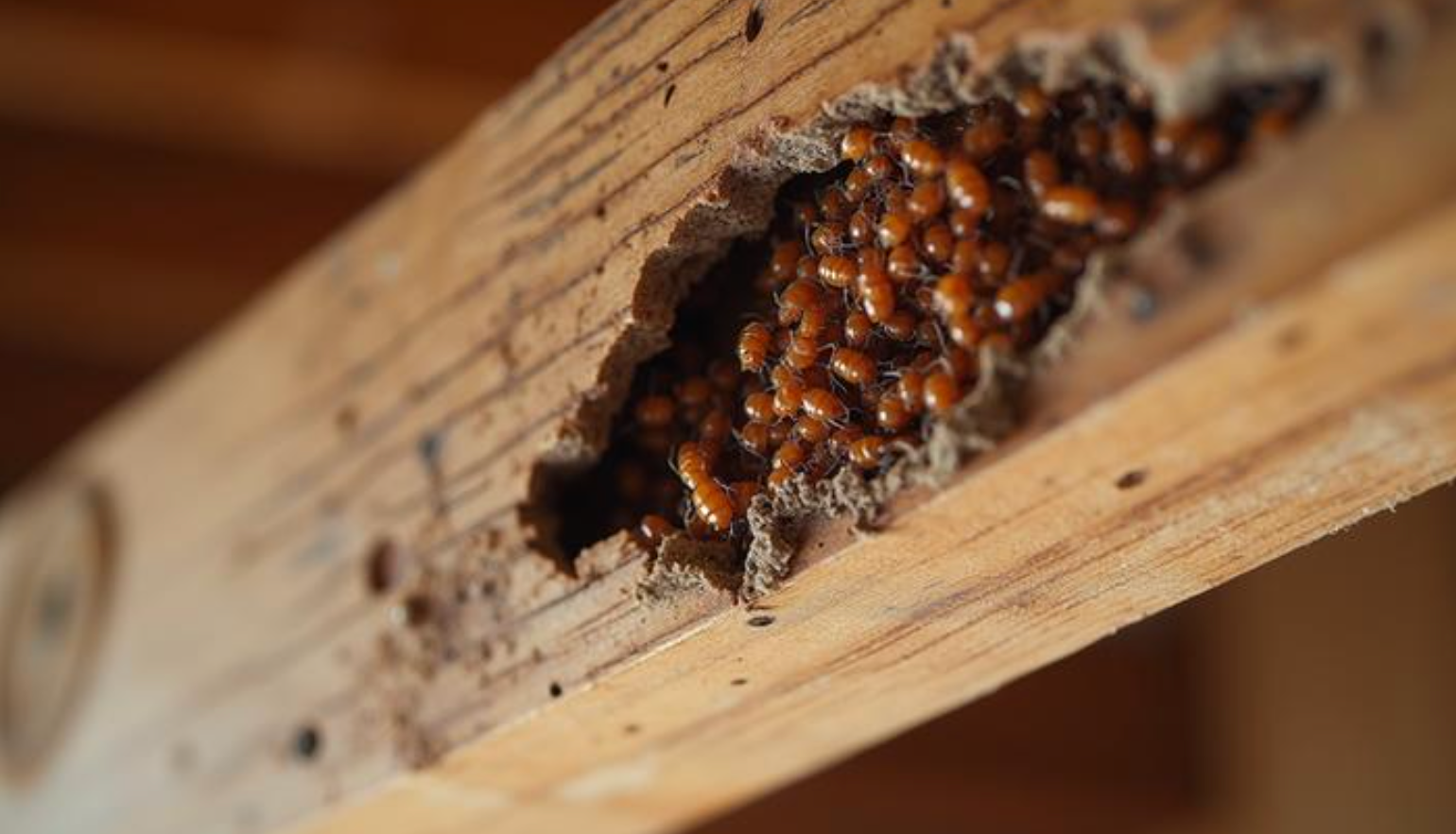
Termites devour the cellulose found in wood, frequently fashioning internal tunnels while preserving much of the exterior surface. As the destruction advances, the compromised wood may emit a hollow sound when tapped or exhibit a concerning weakness.
Warning indicators may manifest as crumbling trim, weakened baseboards, damaged doorframes, or flooring that feels less solid than anticipated.
Homeowners should not jump to the conclusion that every hollow sound signifies termite presence. Wood rot, moisture damage, and construction flaws can yield similar signs. Nevertheless, homeowners ought to investigate any unexplained changes in structural wood before they escalate further.
5. Bubbling Paint or Unexplained Surface Damage
Through our extensive experience combating these pests, Leaf Pest Management has found that bubbling paint, blistered finishes, and uneven wooden surfaces can sometimes signal hidden termite damage. These indicators often coincide with moisture-related issues, especially in bathrooms, kitchens, windows, and exterior walls. The California Department of Pesticide Regulation lists bubbled paint, hollow wood, and compromised wood as key signs homeowners should watch for when assessing potential termite activity. Because paint damage can come from various sources, homeowners should avoid jumping to conclusions about termite involvement without additional evidence.
6. Doors and Windows That Suddenly Become Difficult to Open
Doors or windows that start to stick may indicate alterations in the surrounding wooden framing. Termite infestation can lead to distortion or weakening of these wooden elements. Nevertheless, seasonal humidity, shifts in the foundation, and typical building settlement often serve as common explanations. If sticking doors are accompanied by discarded wings, frass, mud tubes, or decaying wood, this combination calls for a thorough inspection.
7. Visible Termites or Repeated Swarming Activity
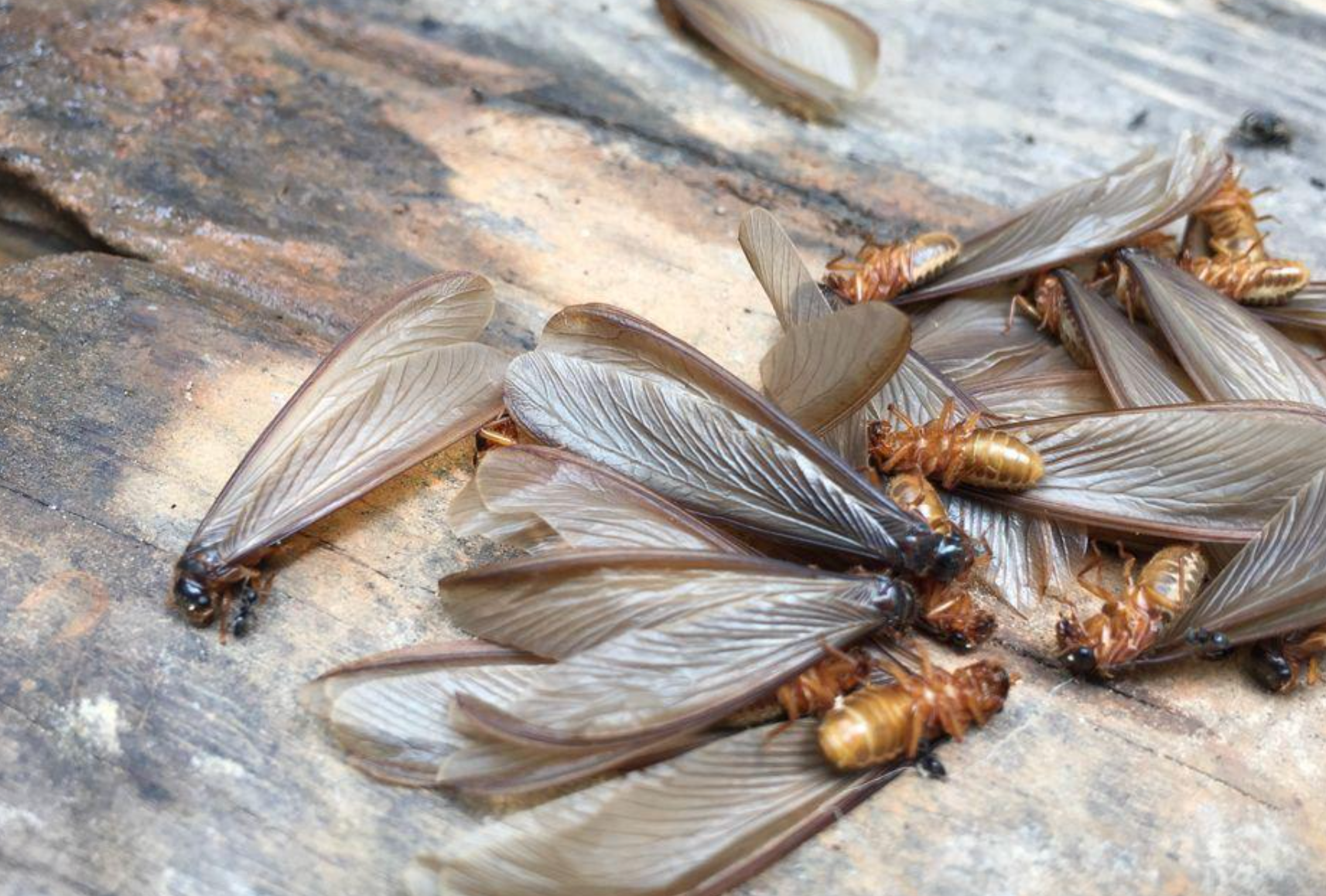
Finding live termites in a property is a key reason to investigate further, especially when the insects appear to be emerging from walls, baseboards, or structural wood.
Termites can be confused with flying ants, but there are recognizable differences. Winged termites generally have relatively straight antennae, broad waists, and two pairs of wings of approximately equal length. Flying ants typically have elbowed antennae, narrow waists, and front wings larger than their hind wings.
If you encounter suspicious insects, photograph them or retain a sample for identification rather than immediately applying household pesticides.
How Much Damage can Termites really do?
One of the biggest mistakes homeowners make is assuming they'll notice termites before significant damage occurs. Unfortunately, termites are very good at staying hidden, often feeding inside wooden framing, walls, floors, and other areas you rarely inspect.
Drywood termite colonies can take years to mature, while subterranean termites can establish extensive underground networks that allow them to reach multiple areas of a property. According to the University of California's Integrated Pest Management program, a property with a footprint of approximately 2,400 square feet could potentially have several subterranean termite colonies nearby, with hundreds of thousands of termites collectively searching for food. This is an illustrative scenario, not a typical colony count for every home.
The amount of damage depends on the termite species, colony size, moisture conditions, construction materials, and how long the infestation has remained undetected. There's no reliable way to predict exactly how much damage termites will cause within a particular period.
At Leaf Pest Management, we believe identifying a potential problem early is far better than waiting until visible damage requires expensive repairs. That's why understanding the warning signs and investigating suspicious activity matters.
Where Should Los Angeles and Ventura County Homeowners Look for Termites?
You don't need to tear apart walls or crawl beneath your house to identify potential warning signs. A simple visual inspection of accessible areas can help you recognize conditions that deserve professional attention.
Start outside your home by examining exposed foundations, wooden siding, exterior trim, deck supports, fence connections, and garage framing. Pay particular attention to areas where wood contacts soil, irrigation creates excessive moisture, or landscaping conceals portions of the structure.
Inside your home, check windowsills, baseboards, doorframes, exposed attic framing, and accessible areas near plumbing. Look for discarded wings, mud tubes, small piles of termite droppings, weakened wood, or unexplained surface damage.
Throughout Thousand Oaks, Westlake Village, Agoura Hills, Oak Park, Calabasas, and Newbury Park, many residential properties feature extensive landscaping, irrigation systems, wooden fencing, and outdoor structures. These features can create areas where moisture accumulates, or termite activity goes unnoticed.
Our recommendation at Leaf Pest Management is simple: Learn what to look for, monitor changes around your property, and investigate anything suspicious before assuming it's harmless. You don't need to become a termite expert, but recognizing the early warning signs can help protect your investment.
What About Commercial Buildings and Rental Properties?
Termites don't distinguish between residential homes and commercial properties. Office buildings, restaurants, retail centers, apartment complexes, and other commercial structures throughout Los Angeles and Ventura counties can experience termite infestations and structural damage.
For business owners and property managers, termites can create challenges beyond the actual damage. Repairs may interfere with business operations, require coordination with tenants, increase maintenance expenses, or temporarily restrict access to certain areas of a building.
At Leaf Pest Management, we encourage commercial property owners and managers to incorporate pest monitoring into their regular building maintenance procedures. Maintenance teams should watch exposed wooden framing, exterior trim, storage areas, utility penetrations, moisture-prone locations, and construction or renovation areas.
Qualified structural pest control professionals should evaluate commercial termite concerns and understand the building's construction and occupancy requirements. A professional evaluation can help distinguish active infestations from old damage and identify appropriate treatment or repair options.
For commercial properties, early detection isn't just about protecting the building. It's also about minimizing operational disruptions, avoiding unexpected expenses, and maintaining a safe, well-maintained environment for employees, tenants, and customers.
What Should You Do If You Find Signs of Termites?
Discovering possible termite activity can be concerning, but it doesn't automatically mean your home needs fumigation or extensive structural repairs. Different termite species require different approaches, and not every sign of previous activity indicates an ongoing infestation.
Start by documenting what you've discovered. Photograph damaged wood, discarded wings, mud tubes, or suspicious debris. Record where you found them and whether you've noticed similar evidence elsewhere on the property.
Avoid disturbing potentially damaged structural materials or applying household pesticides until you've identified the problem. General pest control treatments are not necessarily appropriate for termite infestations, and treating the wrong area may leave the underlying problem unresolved.
At Leaf Pest Management, we believe homeowners deserve to understand what's happening before making expensive treatment decisions. The priority should be identifying the pest, investigating the evidence, and determining whether additional inspection or specialized treatment is necessary.
If you suspect termite activity, arrange an inspection with a California-licensed structural pest control professional qualified to evaluate termites. The inspection should help identify the species, accessible evidence of activity, potential damage, and recommended treatment options.
You can also research previous property inspections through California's Structural Pest Control Board. Its Wood Destroying Organism System provides access to certain inspection records from the preceding two years.
We recommend avoiding a treatment agreement before understanding the findings, recommended scope of work, and associated costs.
Preventing Termite Problems Before They Start
The best approach to termite prevention begins with understanding what makes your property vulnerable. Although no prevention method can guarantee termites will never become a problem, maintaining your home and reducing favorable conditions can help lower the risk.
Start by inspecting areas where wood meets soil, repairing plumbing leaks, and correcting drainage problems that let moisture accumulate near foundations. Store firewood and unused lumber away from your home, and address damaged exterior wood before conditions worsen.
Homeowners should also inspect wooden fences, decks, retaining structures, and landscaping features connected to or near their homes. Proper drainage and ventilation are particularly important because subterranean and dampwood termites thrive in moisture-related conditions.
Drywood termites present a different challenge because they can establish colonies directly inside relatively dry wooden structures without requiring soil contact. For these termites, regular inspections, building maintenance, and early identification are especially important.
At Leaf Pest Management, we focus on understanding why pests are present, identifying the conditions that allow them to thrive, and recommending practical ways to reduce future problems.
Rather than relying exclusively on pesticides, we believe effective pest management starts with education, proper identification, prevention, and clear communication.
How much does Termite Removal cost?
Termite treatment costs in Los Angeles and Ventura counties can range from about $1,000 to $15,000 or more for professional treatments, depending on the termite species, infestation severity, property size, treatment method, and infestation size.
Extensive infestations requiring whole-home fumigation may cost $3,000 to $20,000 or more, particularly for larger homes or complex structures. These are planning estimates rather than fixed local prices, and not every infestation requires fumigation. According to Angi's Los Angeles termite treatment cost guide and its 2026 fumigation cost analysis, treatment costs vary significantly based on the property and scope of work.
However, leaving termites untreated can cost far more than early treatment. According to Angi's 2026 termite damage repair analysis, homeowners commonly face $1,000 to $10,000 in termite-related repairs, while extensive structural damage involving floor joists, load-bearing walls, or supporting beams can push expenses into the tens of thousands. These repair costs are generally separate from termite treatment, and actual costs depend on the damage discovered.
At Leaf Pest Management, we believe identifying termite activity early, understanding the extent of the problem, and obtaining a clear treatment recommendation is far more sensible than waiting for damage to become expensive. The objective isn't to sell homeowners the most expensive treatment; it's to identify the problem early and help prevent a manageable infestation from becoming a major structural repair.
Latest Posts