

Fall Pest Control Checklist | Southern California Homeowners
October 5, 2026
Fall in Southern California doesn't bring the same dramatic temperature swings as colder parts of the country, but pest activity still shifts as summer ends. Cooler nights, dry conditions, landscaping changes, and the search for food, water, and shelter can push rodents, ants, spiders, cockroaches, and other pests closer to homes.
For homeowners in Westlake Village, Thousand Oaks, Agoura Hills, Calabasas, and surrounding communities, fall is one of the best times to inspect the property and correct conditions that could turn into larger pest problems during winter.
Here is a practical fall pest-control checklist to help protect your home.
1. Inspect Your Roofline, Attic, and Exterior Openings

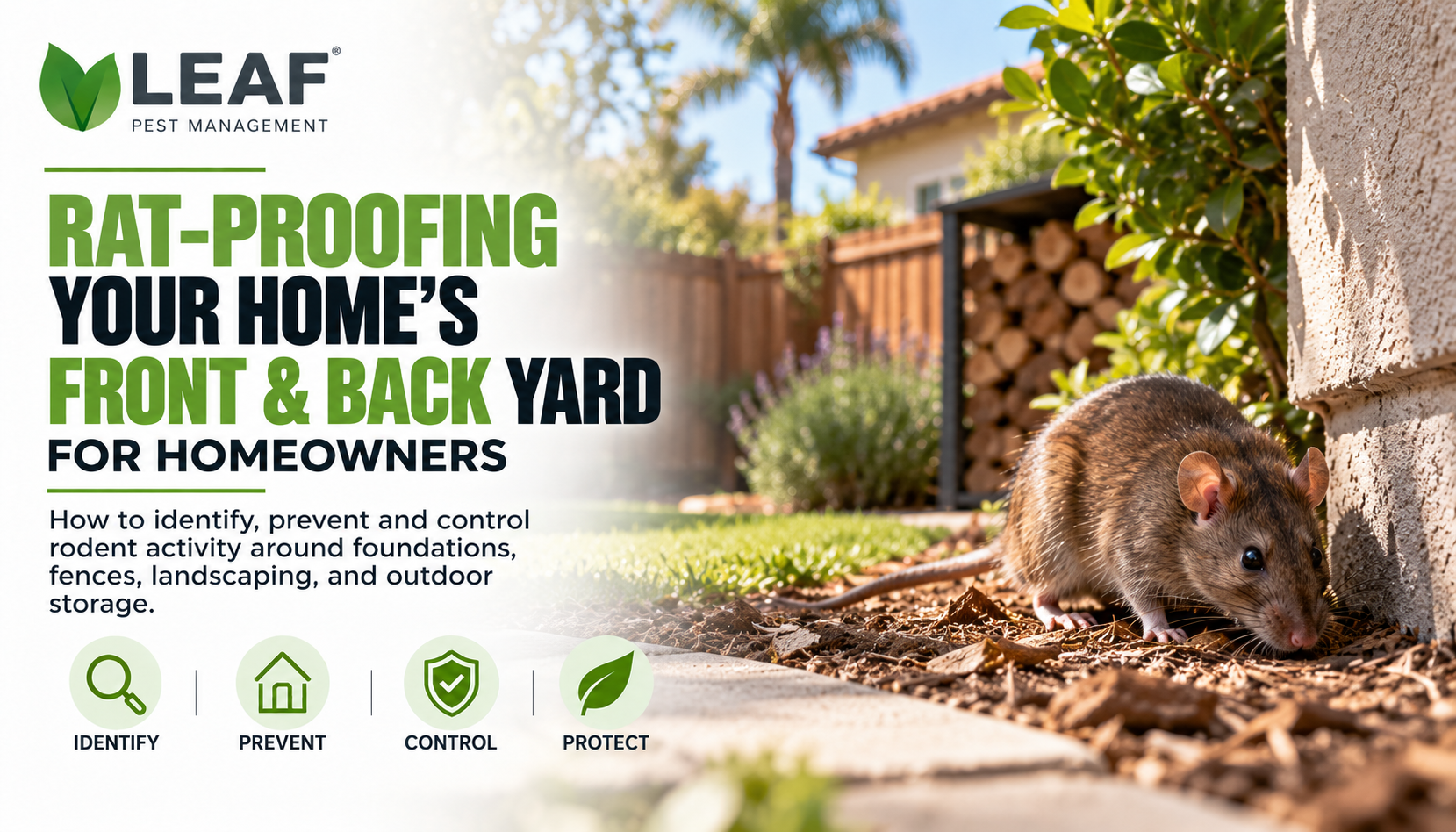
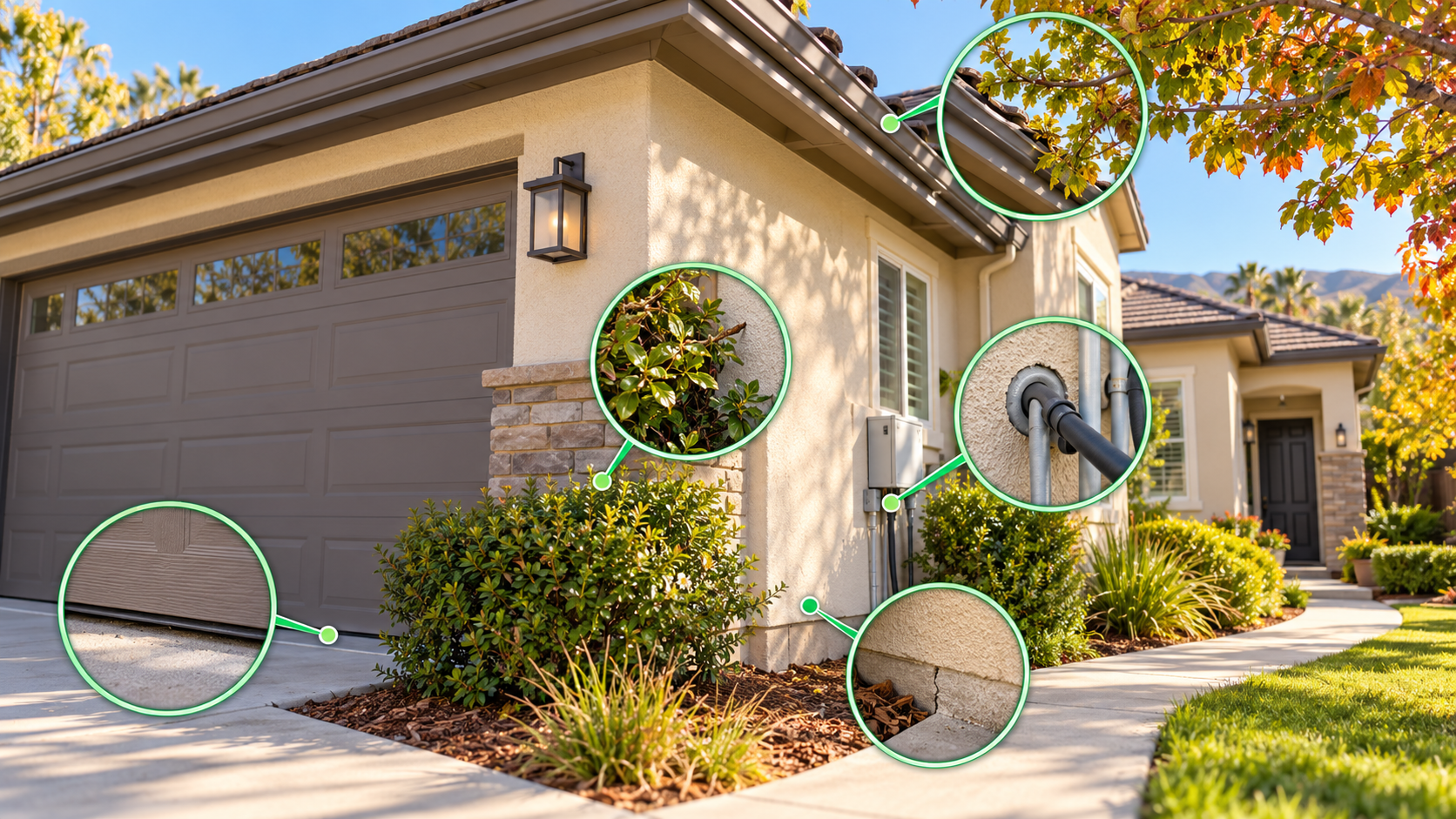
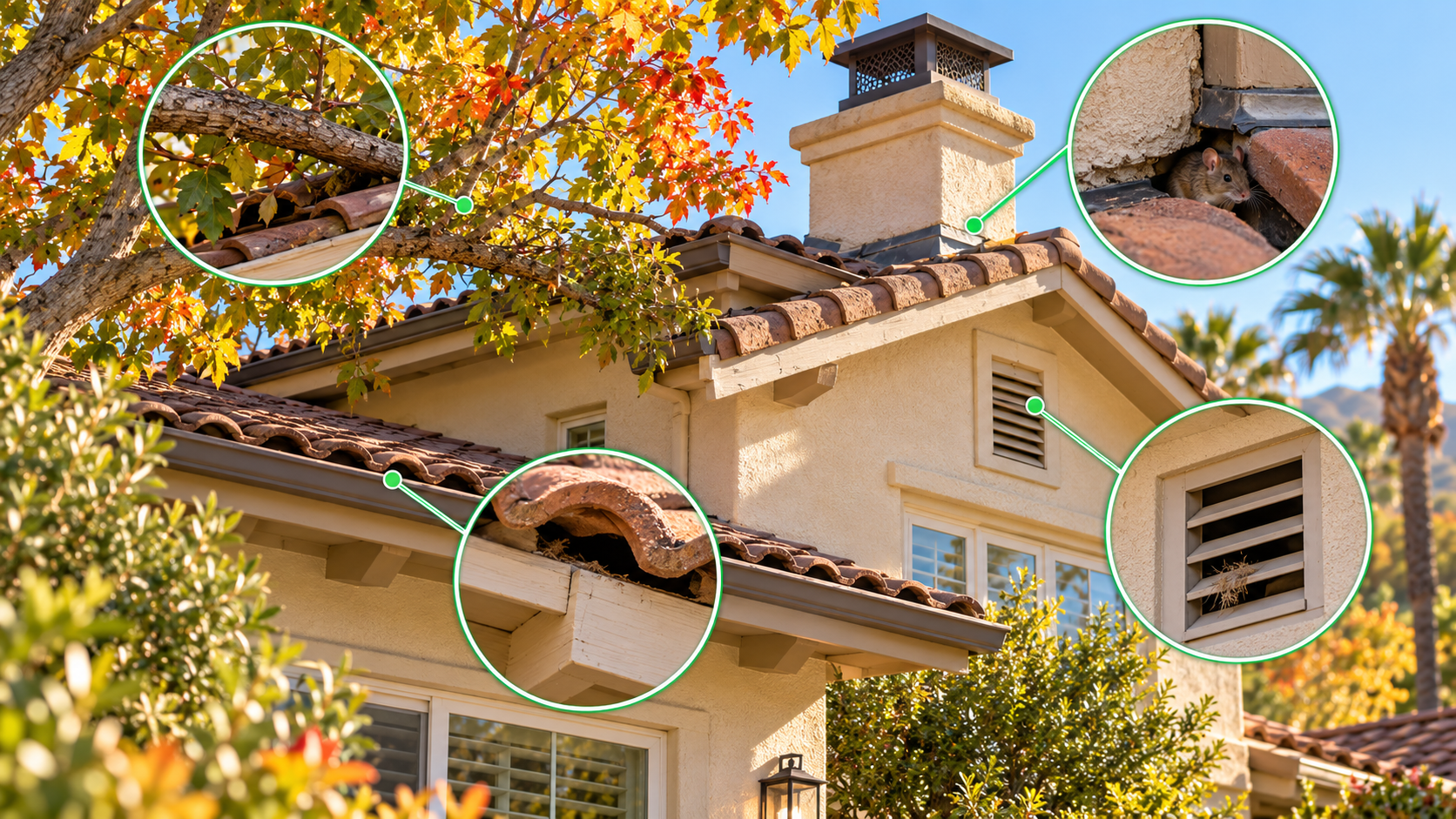
Rodents do not need a wide-open door to enter a home. Roof rats and mice commonly use openings around rooflines, vents, utility penetrations, garages, and other structural gaps.
Roof rats are found throughout California cities and frequently live near people, where they can damage structures, contaminate food, and introduce parasites or pathogens.
https://ipm.ucanr.edu/home-and-landscape/rats/
Walk around your house and inspect:
- Roof and attic vents
- Gaps around pipes and utility lines
- Garage-door edges
- Damaged screens
- Openings beneath eaves
- Exterior doors that do not seal tightly
- Tree limbs touching or overhanging the roof
Tree branches are particularly important around homes with mature landscaping because climbing rodents can use vegetation and structures as travel routes. If you hear scratching in the attic or walls, see droppings, or notice gnawing, do not wait for the problem to disappear. Rodents generally become harder—not easier—to remove once they have established nesting areas.
Learn more about Leaf Pest Management's rodent control services.
2. Remove Food and Water Sources Around the House

Pest prevention often starts with eliminating what pests are looking for.
Inspect the exterior of your home for:
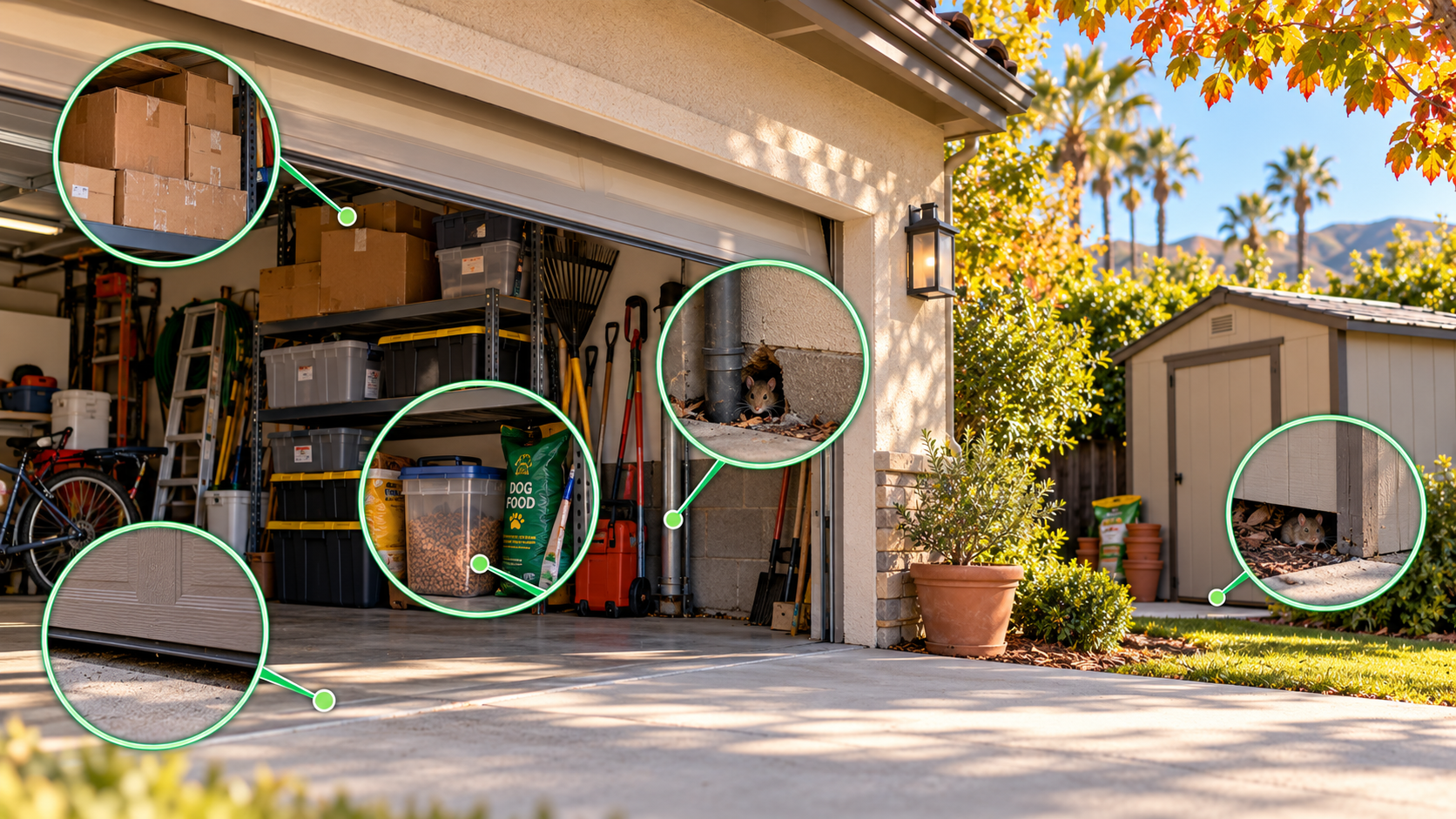
- Pet food left outside
- Birdseed beneath feeders
- Fallen fruit
- Open trash containers
- Standing water
- Leaking irrigation
- Excess moisture near the foundation
- Food residue around outdoor kitchens or grills
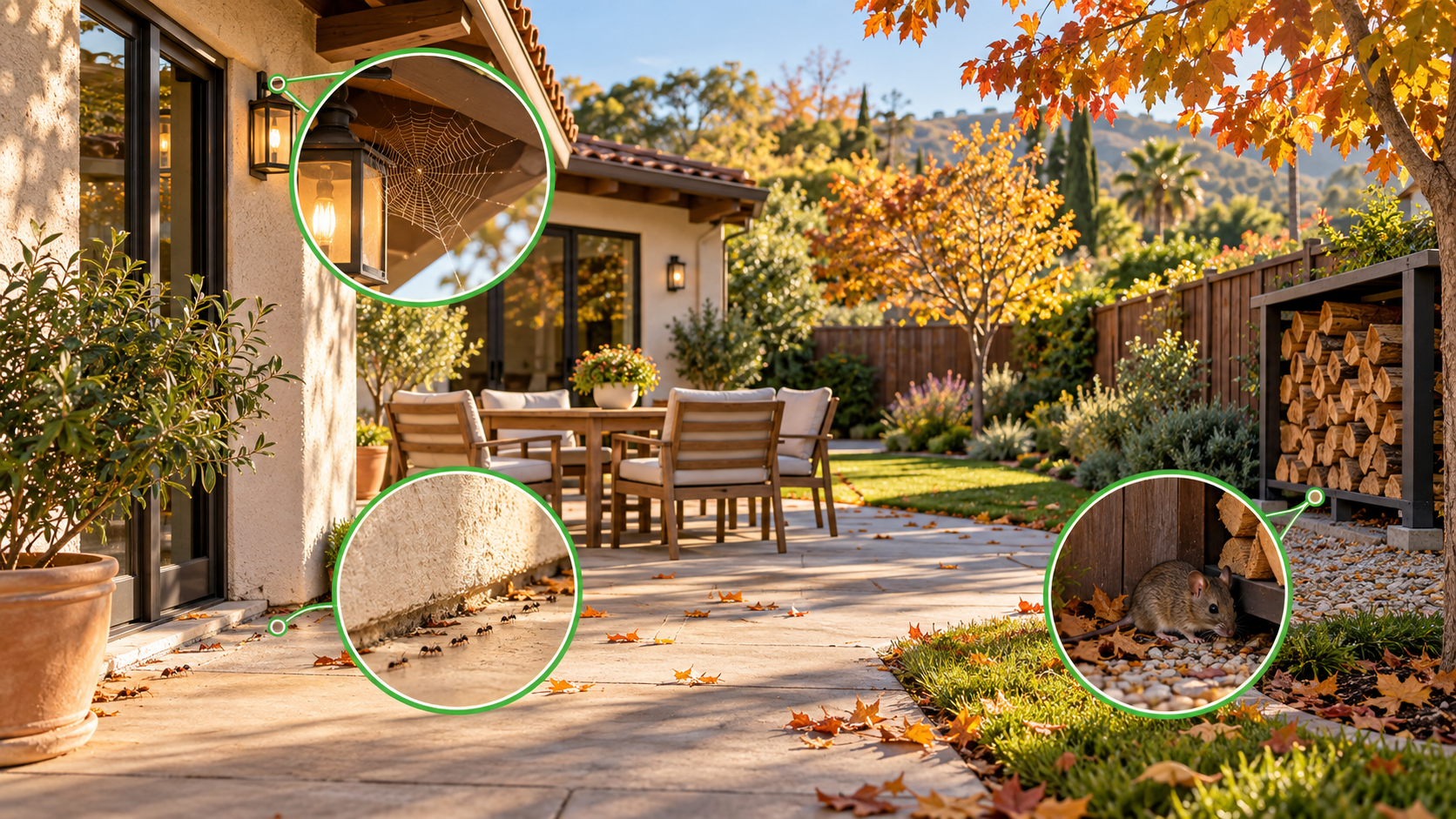
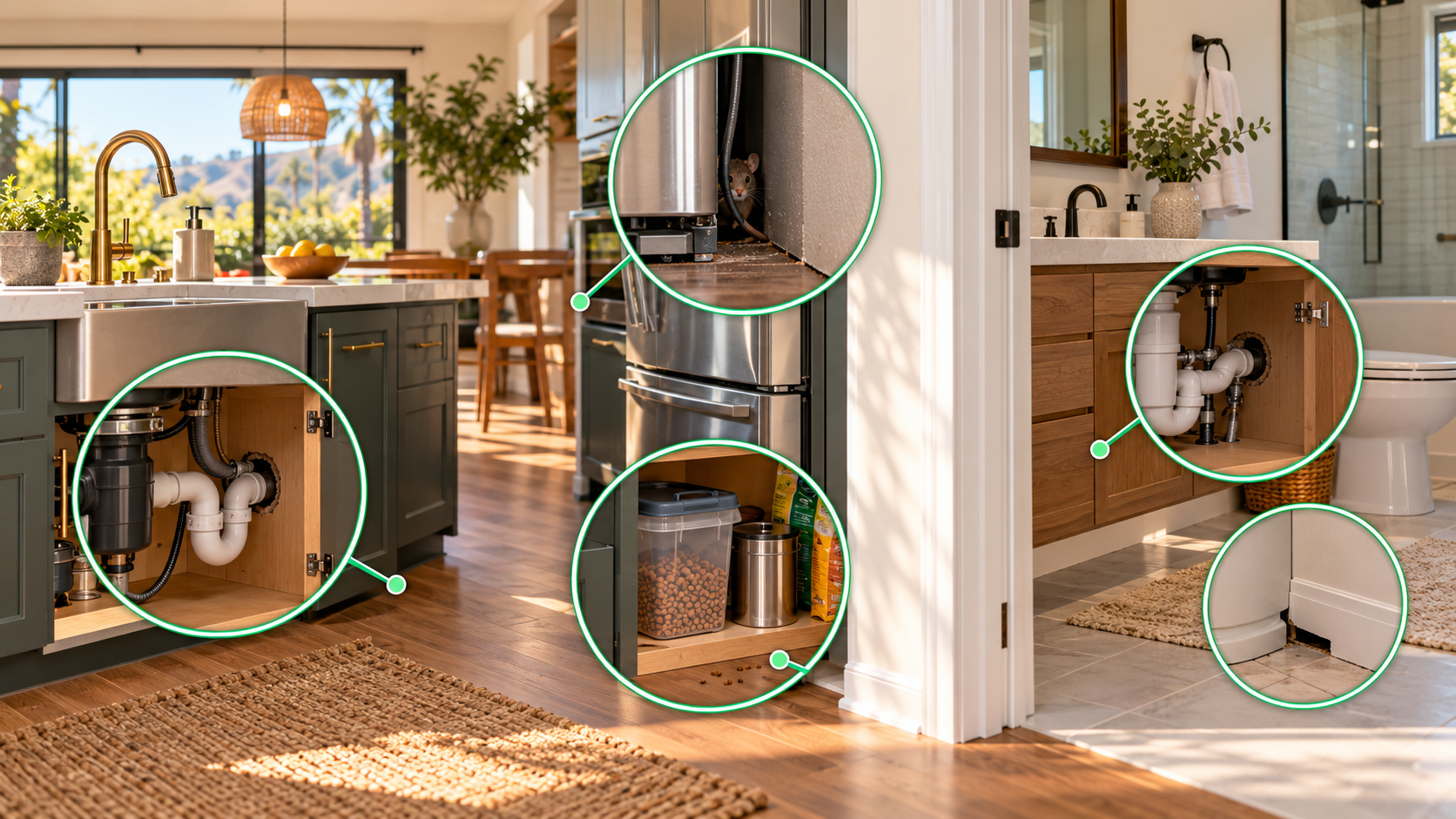
Inside, keep food in sealed containers and clean areas underneath appliances, cabinets, pantry shelving, and pet-feeding stations. Ants are among the most common household pests in California, and they frequently enter buildings while searching for food and water. California has roughly 270 ant species, although fewer than a dozen are considered major structural pests. The Argentine ant is the most common ant found around California homes and gardens.
https://ipm.ucanr.edu/home-and-landscape/ants/
Reducing food, water, and easy entry points makes your home significantly less attractive to ant colonies.
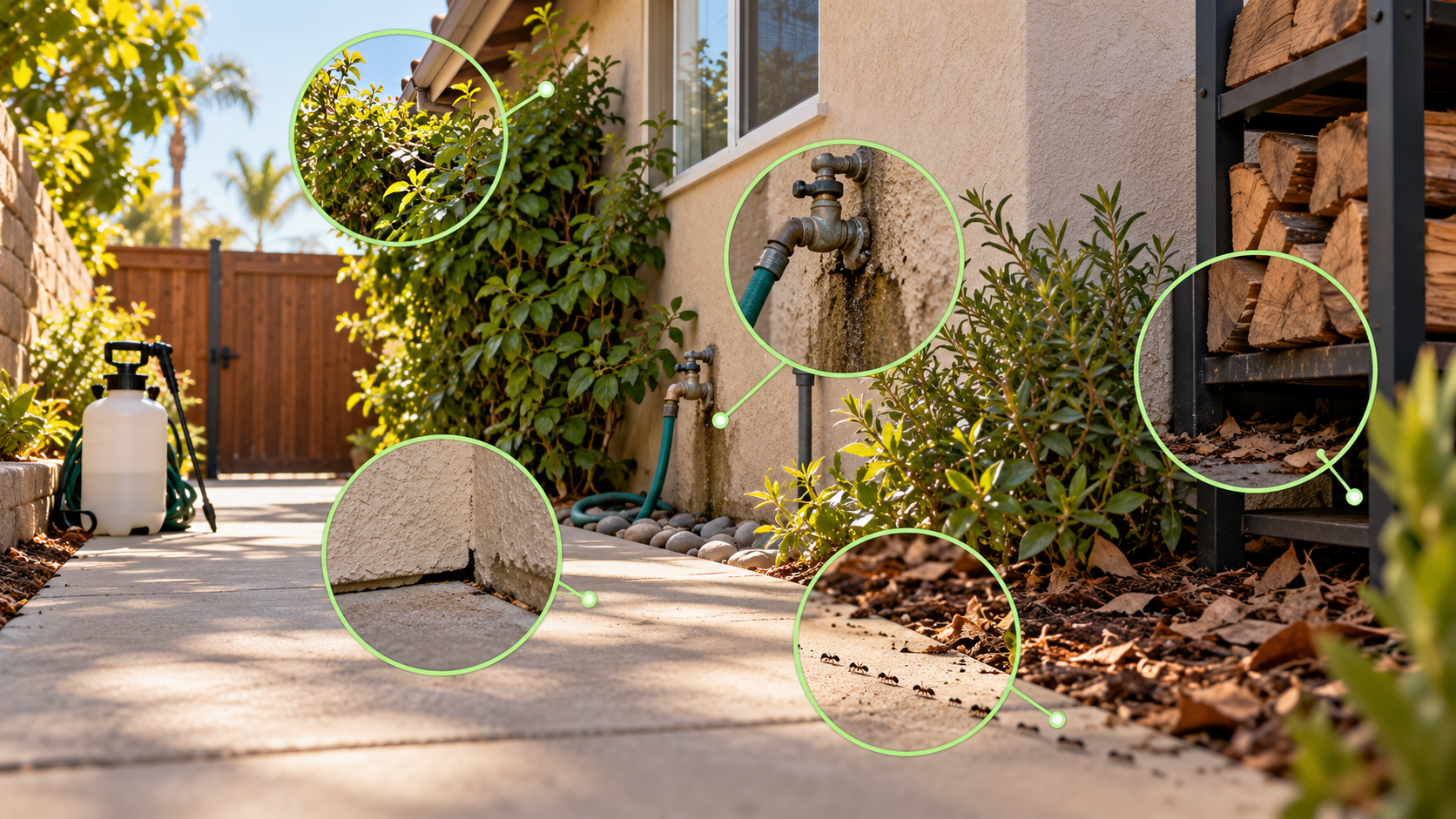
3. Trim Landscaping Away From the House

Dense landscaping can create a protected pathway directly to your home.
During your fall yard cleanup:
- Trim bushes away from exterior walls.
- Cut tree limbs away from the roof.
- Remove heavy vegetation around the foundation.
- Clear leaf litter and debris.
- Move firewood away from the structure.
- Remove unnecessary clutter from side yards.
This is particularly useful for reducing spider habitat.
UC's Statewide Integrated Pest Management Program recommends keeping foundations clear of leaf litter, heavy vegetation, trash, and other materials that create hiding places for spiders. It also recommends sealing foundation cracks and gaps around doors and windows.
https://ipm.ucanr.edu/home-and-landscape/spiders/
4. Check Garages, Sheds, and Storage Areas

Fall often means pulling out holiday decorations, sports equipment, storage boxes, and seasonal items that have been sitting untouched for months. Those quiet areas can also provide ideal pest habitat. Wear gloves when moving boxes or materials that have been stored for long periods, particularly in garages and sheds.
Western black widows are widespread in California and typically prefer dark, dry, protected areas around structures. Garages, woodpiles, clutter, cracks, and undisturbed storage spaces can provide suitable habitat.
https://ipm.ucanr.edu/home-and-landscape/widow-spiders-and-their-relatives/
Whenever possible:
- Use sealed plastic storage containers.
- Keep boxes off the floor.
- Avoid stacking materials directly against walls.
- Remove old cardboard.
- Vacuum webs and corners periodically.
Most spiders found around homes are beneficial predators, but reducing clutter makes it easier to identify and control species you do not want living near frequently used areas.
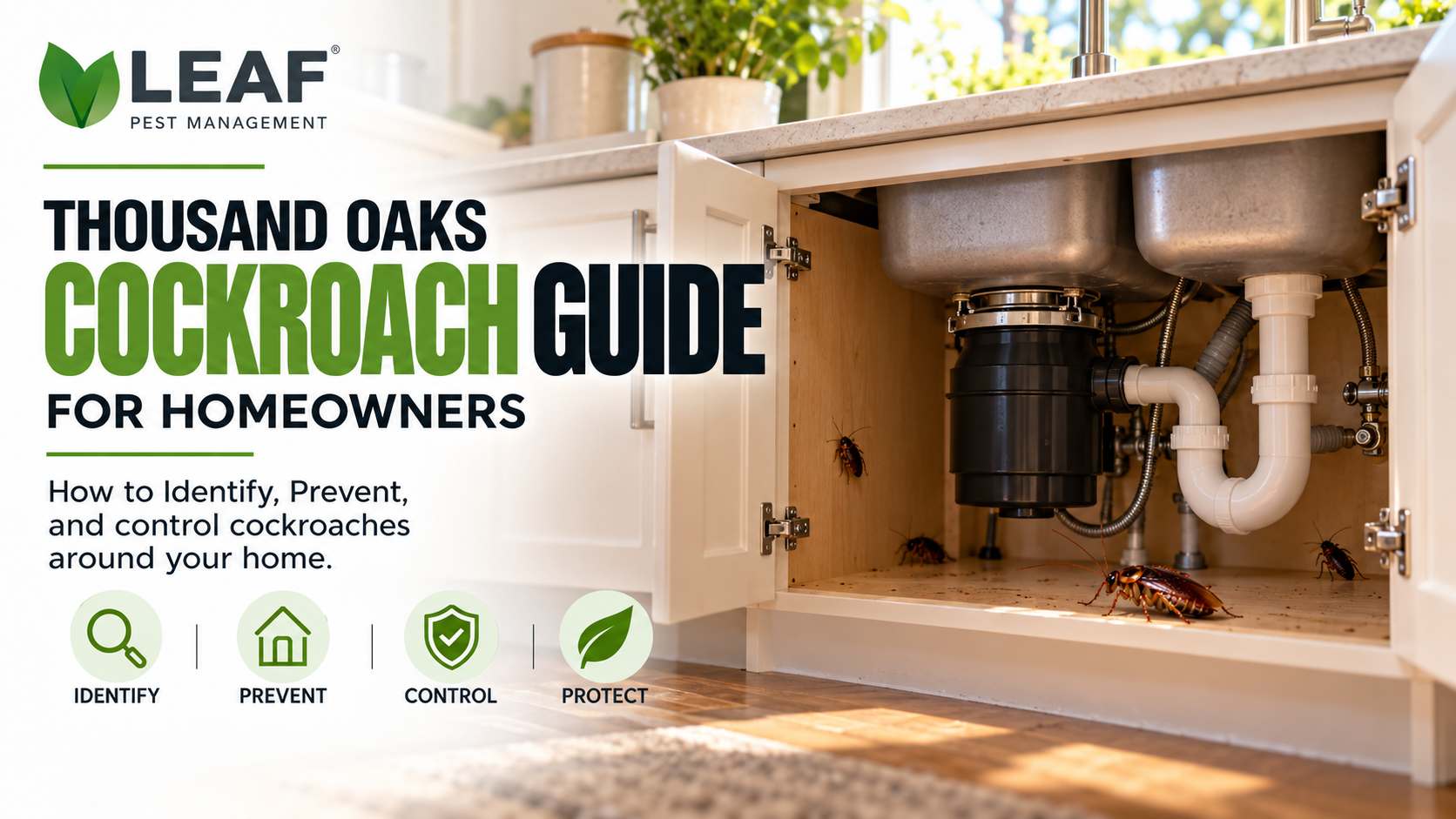
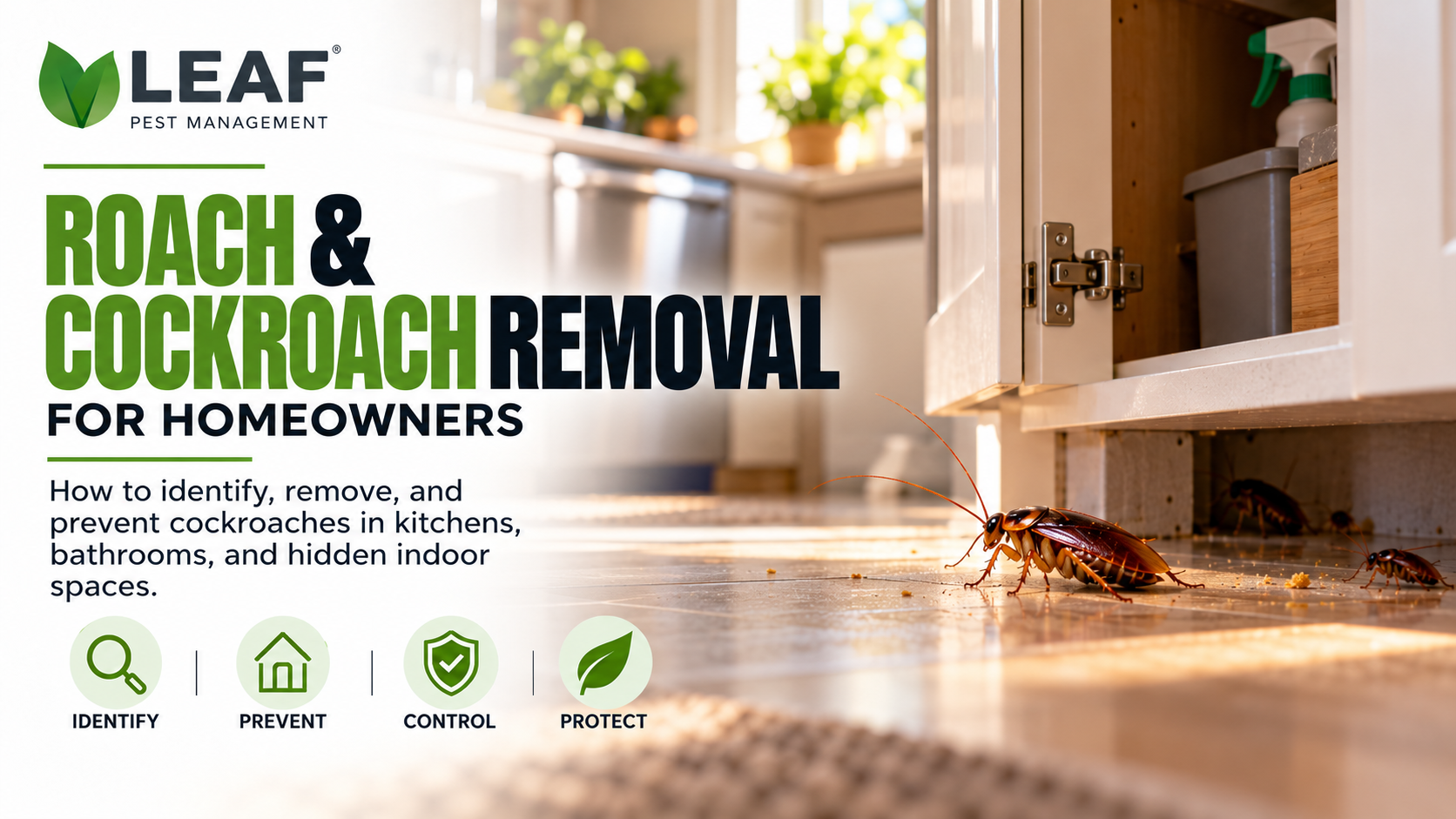
5. Inspect Kitchens and Bathrooms for Cockroach Conditions

Cockroaches prefer dark, protected areas where food and moisture are available.
Check:
- Under sinks
- Behind refrigerators
- Around dishwashers
- Beneath kitchen appliances
- Pantry corners
- Pipe penetrations
- Bathroom cabinets
- Areas with plumbing leaks
Cockroaches are considered important household pests because indoor infestations can contaminate food and produce allergens. UC IPM notes that cockroach allergens are also associated with asthma risk, particularly where infestations become substantial.
https://ipm.ucanr.edu/home-and-landscape/cockroaches/
Seeing one cockroach does not necessarily mean you have a major infestation, but repeated sightings—especially during daylight hours—should be investigated.
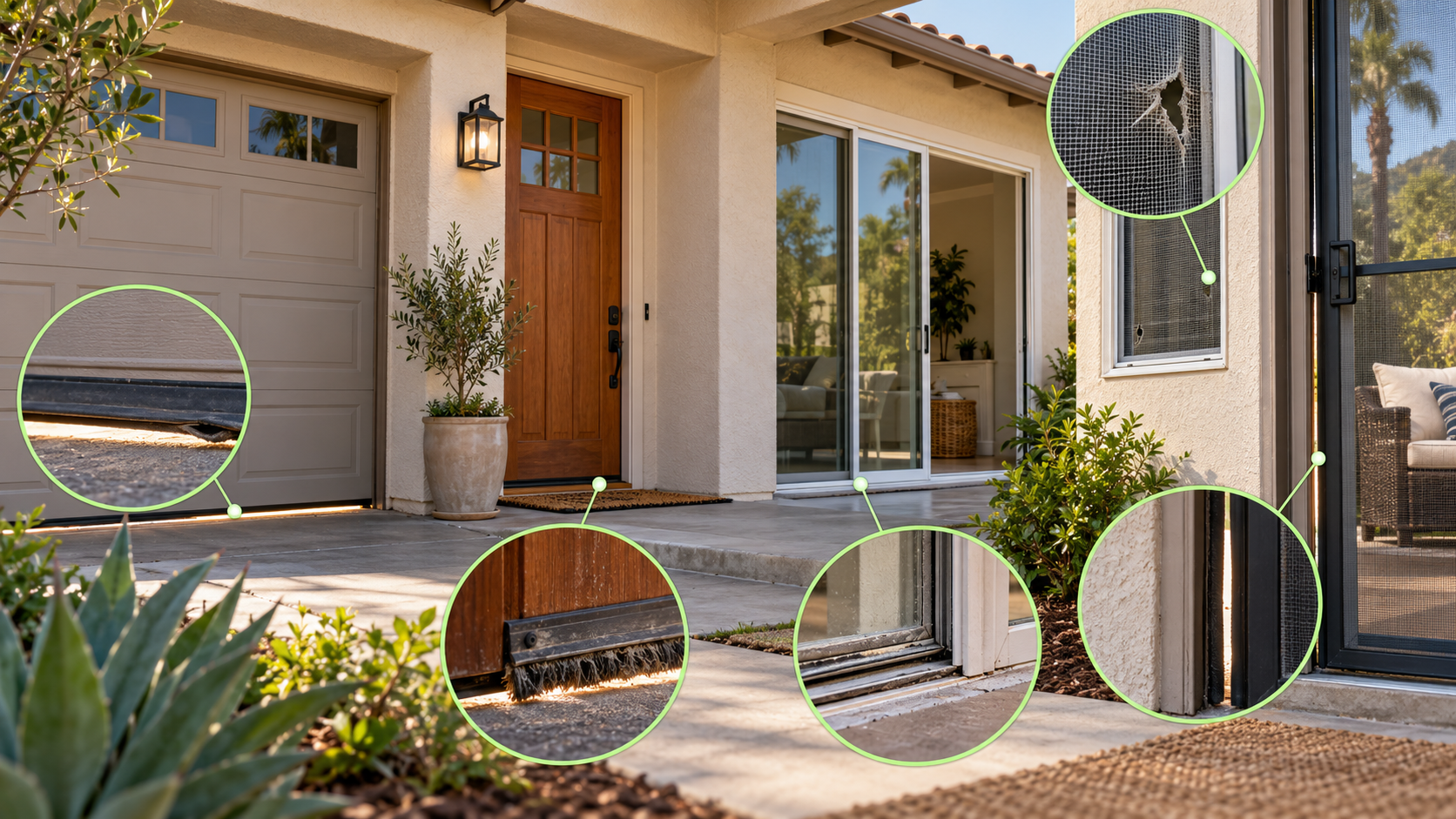
6. Check Weatherstripping and Door Sweeps

One of the simplest pest-control improvements is also one of the most overlooked. Stand inside your garage or near exterior doors during daylight. If you can see light around the door, there may be enough space for insects or small rodents to enter.
Inspect:
- Garage-door seals
- Exterior door sweeps
- Sliding-door seals
- Window screens
- Screen doors
Repair damaged materials before cooler weather increases pressure on pests to find protected areas.
7. Reduce Exterior Lighting Near Doors and Windows

Outdoor lights attract many flying insects. Those insects can then attract spiders and other predators.
UC IPM recommends placing exterior lights away from doors and windows when practical because lights can attract insects and, indirectly, spiders.
https://ipm.ucanr.edu/home-and-landscape/spiders/
Consider motion-activated lighting or relocating fixtures away from commonly opened entrances.
8. Pay Attention to Small Pest Changes
Most infestations don't appear overnight.
The early warning signs are usually minor:
- A few ants near a sink
- One new spider web around the garage
- Droppings behind stored items
- Scratching noises after dark
- Gnaw marks
- Cockroach sightings
- Small holes developing in the yard
These signs matter because they can identify a problem before a larger population becomes established.
Leaf Pest Management's ongoing pest-control approach follows the same principle: identify pest activity, entry points, moisture conditions, landscaping factors, and structural vulnerabilities before small problems become recurring infestations.
9. Do Not Rely Only on Spraying What You See

Treating the visible pest is not always the same as correcting the infestation.
Long-term pest control typically requires identifying:
- What pest is present
- Where it is entering
- What is attracting it
- Where it is nesting
- Whether moisture is contributing
- Whether landscaping or structural conditions are creating recurring pressure
That is why prevention and inspection are generally more valuable than repeatedly treating individual pests as they appear.
10. Consider Preventive Pest Control Before Winter
Southern California homes can experience pest pressure throughout the year. A recurring pest-control program lets us inspect the property regularly so we can identify changing conditions before homeowners face a major infestation.
At Leaf Pest Management, our residential pest-control programs are designed for each property. We evaluate the home, landscaping, moisture conditions, entry points, and pest activity rather than relying on the same treatment for every house.
The objective is simple: control current pest activity while reducing the conditions that allow it to return.
If you live in Westlake Village, Thousand Oaks, Agoura Hills, Oak Park, Calabasas, or the surrounding area and want help preparing your home for fall and winter pest activity, contact Leaf Pest Management for an inspection or service recommendation.