
Thousand Oaks Homeowner Mosquito Guide
Introduction Summary: Thousand Oaks’ Mediterranean climate and outdoor lifestyle make summer evenings enjoyable, but they also create inviting conditions for mosquitoes. Mosquitoes are more than a nuisance — they can carry serious diseases. Protecting your family means understanding the mosquito species in Southern California, how they breed, and the integrated control measures that break the cycle. This guide compiles current scientific research, state and local guidance, and vector‑control recommendations to help homeowners keep mosquitoes at bay.
1. Know Your Enemy: Mosquito Species and the Diseases They Spread
A small group of dangerous species
Diversity of species. Over 3,500 mosquito species exist worldwide, but only a small fraction transmit diseases to humans. California has more than 50 species, ranging from desert to alpine environments. Mosquitoes of greatest concern belong to the genera Culex, Aedes, and Anopheles.
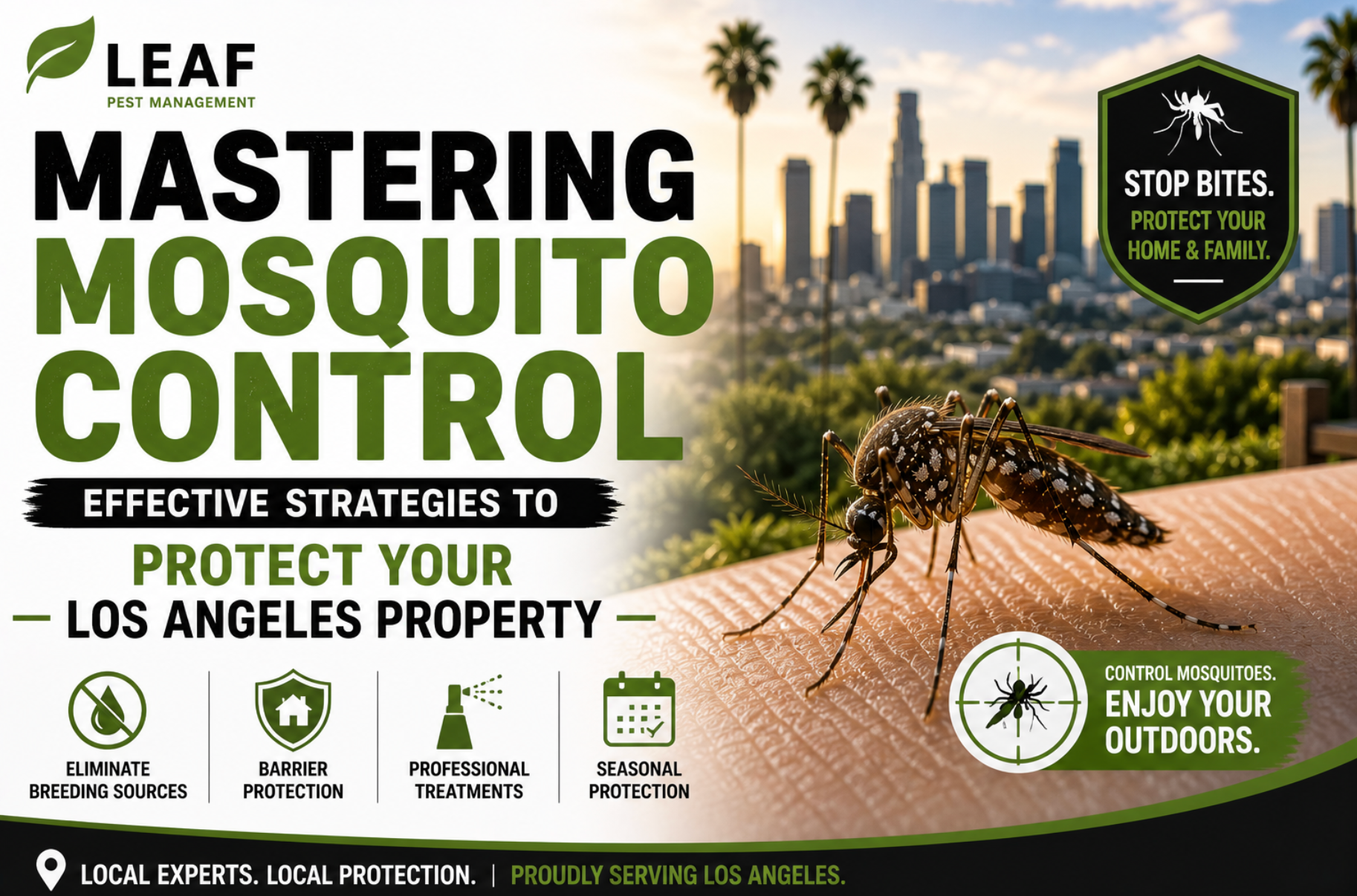
Invasive Aedes mosquitoes. The invasive Aedes aegypti and Aedes albopictus (often called “black‑and‑white mosquitoes”) thrive in urban environments, feed aggressively during the day, and prefer human blood. They lay eggs in containers as small as a bottle cap, and their eggs can survive dry conditions for more than a year. These mosquitoes can spread Zika, chikungunya, and dengue, and they have spread throughout Southern California.
Culex mosquitoes. Species such as Culex tarsalis feed at dusk and transmit West Nile virus (WNV), Western equine encephalomyelitis, and St. Louis encephalitis. WNV is now endemic in California; it primarily cycles between Culex mosquitoes and birds, but humans and horses can be infected.
Anopheles mosquitoes. These mosquitoes can transmit malaria parasites. Malaria was eliminated from California decades ago, but imported cases occasionally lead to local transmission.
Human health impacts
Disease severity. Most people infected with mosquito‑borne viruses experience no symptoms. However, about one in 150 WNV infections progress to neuroinvasive disease, which can cause high fever, meningitis, encephalitis, paralysis or death. Severe encephalitis from Western equine encephalitis occurs more often in infants, while St. Louis encephalitis disproportionately affects older adults.
Vulnerable populations. Infants, older adults, and those with compromised immune systems are at higher risk of severe disease. Horses are highly susceptible to WNV and can die if unvaccinated.
2. Understand the Mosquito Life Cycle
Mosquitoes undergo four life stages — egg, larva, pupa, and adult. Females lay eggs on or near standing water. In warm weather, the entire life cycle can be completed in five to seven days. Larvae (wigglers) live in water and feed on organic matter. Pupae (tumblers) are non‑feeding and transform into adults. Females require blood meals to develop eggs; males feed only on nectar. Warm temperatures accelerate development — in summer, development can occur in as little as five days. Because some Aedes eggs can withstand desiccation for over 12 months, eliminating water sources is critical.
4. Identify and Eliminate Breeding Sites Around Your Home
Mosquitoes only need a teaspoon of water to breed. Regularly inspecting and modifying your property will greatly reduce mosquito populations. Use the checklist below as a guide; many recommendations are adapted from the Greater Los Angeles County Vector Control District and Ventura County Environmental Health Division’s home inspection checklist.
Household Containers to be wary of:
| Potential breeding source | Action |
|---|---|
| Buckets, watering cans, cups, bottle caps and other small containers | Empty weekly, store upside down or dispose of them. |
| Old tires | Recycle or drill drainage holes; ensure holes remain unblocked. |
| Pet water bowls | Scrub and refill at least once a week. |
| Tarps or plastic covers | Drain water trapped in folds so it runs off. |
| Potted plant saucers | Empty or flush with a hose weekly; remove saucers or add aquarium gravel. |
| Rain barrels and rain drums | Cover with fine mesh and tightly secure; seal overflow valves and clean filters. |
| Trash cans, recycling bins and lids | Keep covered or drill holes in the bottom; if collecting rainwater, cover openings with mesh. |
Household Containers to be wary of:
| Potential breeding source | Action |
|---|---|
| Leaky outdoor faucets or window air conditioners | Fix leaks; place rocks or soil under window units to ensure water runs off. |
| Drainage ditches and culverts clogged by vegetation | Remove grass and weed clippings so water drains freely. |
| Gutters (including covered types) | Clean regularly so water flows freely. |
| Hollow fence posts without caps | Install caps to prevent water from collecting. |
| Sump pumps and under‑deck depressions | Screen pump openings, fill low spots with soil and remove items that collect water. |
Backyard and Garden Recreation Areas for Mosquitos
| Potential breeding source | Action |
|---|---|
| Base of patio umbrellas and portable basketball stands | Fill stands with sand or tightly screw in plugs to prevent water accumulation. |
| Bird baths, ornamental ponds and fountains | Dump or flush water weekly; stock ponds with mosquitofish or use larvicide. |
| Wheelbarrows, outdoor grills, lawn furniture | Store upside down or under cover when not in use. |
| Plastic weed‑barrier sheets | Replace with landscape cloth that allows water to drain. |
| Bromeliads and plants that hold water | Dump water from plant cavities weekly or flush out with a hose; consider removing them. |
| Children’s toys (kiddie pools, sandboxes, wagons) | Drill drainage holes, empty water every 5–7 days and store indoors when not in use. |
| Boats, canoes and jet skis | Pump out bilges, turn them over or dump water after each rain. |
| Swimming pools and spas | Maintain water quality, remove water from pool covers, and contact vector control if pools are abandoned. |
| Outdoor storage and decks | Remove or invert any item that could hold water; fill depressions under decks or porches. |
5. Cultural and Biological Control
Drain or treat standing water
Mosquitoes develop only in water. Drain any standing water that persists more than a few days, fill low spots with soil or gravel, or treat the water with a larvicide. The biopesticide Bacillus thuringiensis subspecies israelensis (Bti) kills mosquito larvae when ingested and is harmless to people, pets and plants. It is sold as Mosquito Dunks or granules that float on the water surface and remain effective for about 30 days. Methoprene is an insect growth regulator that prevents larvae from developing into adults, while spinosad (sold as Natular DT) is a naturally occurring neurotoxin effective against many pests. Always follow label directions; misusing pesticides is illegal.
Mosquito‑eating fish
They are most appropriate for man‑made water bodies that do not connect to natural waterways. Do not release mosquitofish into streams or lakes; they are non‑native and can harm local ecosystems. Ventura County residents can request mosquitofish from the Vector Control Program by calling (805) 662‑6582.
6. Personal Protection: EPA Approved Repellents
The Centers for Disease Control and Prevention (CDC) and the Environmental Protection Agency (EPA) recommend repellents registered by the EPA, which have been evaluated for safety and effectivenesslawestvector.org. Always read and follow the product label. Approved active ingredients include:
| Repellent active ingredient | Notes |
|---|---|
| DEET (N,N‑diethyl‑3‑methylbenzamide) | The most widely used conventional repellent; available in many concentrations. Higher percentages offer longer protection. Safe when used as directed. |
| Picaridin (KBR 3023) | A synthetic compound with similar effectiveness to DEET; often less oily and odourless. |
| IR3535 (3‑[N‑butyl‑N‑acetyl]‑aminopropionic acid) | A biopesticide repellent; can be used on skin and clothing. |
| Oil of lemon eucalyptus (OLE) or para‑menthane‑3,8‑diol (PMD) | Plant‑derived ingredients effective against mosquitoes; synthetic PMD is not recommended for children under threelawestvector.org. |
General application tips:
- Apply sunscreen first, then repellentlawestvector.org.
- Never spray repellent under clothinglawestvector.org; apply only to exposed skin and clothing.
- Reapply according to the label; sweating or swimming may shorten protectionlawestvector.org.
- For children: do not use repellents on babies younger than two months; avoid applying repellent to hands, eyes, mouth or broken skin; adults should apply repellent to their hands first and then rub it on the child’s facelawestvector.org. Do not use OLE or PMD on children under threelawestvector.org.
Timing and Mosquito Behavior:
- Mosquito activity varies by species; Culex mosquitoes often bite at dawn and dusk, while invasive Aedes mosquitoes bite during the day. Avoid outdoor activities during peak biting times whenever possible.
- Use fans on patios and decks; mosquitoes are weak fliers and avoid moving air.
- Citronella candles or coils can help in still air but offer limited protection.
7. Community Action and Resources
Mosquito abatement is a community effort. When neighbors neglect their yards, mosquitoes simply fly next door. Join local programs and report issues:
- Vector Control Hotline: Ventura County’s Vector Control Program takes reports of mosquito problems and potential breeding sources at (805) 658‑4310.
- Mosquito fish request: Call (805) 662‑6582 to request mosquito fish for ponds and neglected pools.
- Dead bird reporting: Dead birds often indicate West Nile virus activity; report sightings to 1‑877‑968‑2473.
- Mosquito Source Virtual Home Tour: The Greater Los Angeles County Vector Control District offers an interactive home tour showing cryptic breeding sources and prevention tips.
- Mosquito Watch: Participate in neighborhood watch programs to eliminate breeding sites and report mosquito problems.
8. Conclusion: Integrated Protection for Your Home and Community
Mosquitoes are a persistent part of Thousand Oaks’ warm climate, but homeowners can dramatically reduce their numbers and avoid mosquito‑borne diseases by taking a few consistent actions. Understanding the biology and behavior of local mosquito species, eliminating standing water, using biological controls such as Bti and mosquitofish, installing and maintaining screens, and properly applying EPA‑approved repellents form the backbone of an integrated mosquito management plan. Working together with neighbors and local vector‑control agencies will protect your family and your community, ensuring that evenings in your garden are remembered for their beauty — not for itchy bites.
References: https://www.glamosquito.org/mosquitoes, https://ipm.ucanr.edu/home-and-landscape/mosquitoes/#gsc.tab=0, https://www.lawestvector.org/mosquitoes/protection/, https://rma.venturacounty.gov/divisions/environmental-health/vector-control-program/, https://westnile.ca.gov