
Ant Control Westlake Village
Ants are the ultimate freeloaders. No rent, no invitation, and somehow they bring the entire extended family. If you’re seeing a trail in your kitchen, bathroom, or along a wall, that’s not the problem—that’s the symptom. The real issue is the colony you don’t see, usually buried outside, under your home, or tucked behind walls. Sprays might take out a few scouts, but the colony just sends more. It’s a losing battle without the right strategy.
Small Ants, Big Issues
Ants may be tiny, but they run a disciplined operation. A few scouts find food, leave a scent trail, and suddenly the whole crew shows up for dinner. Crumbs, pet bowls, sugary spills, moisture, and trash areas can all become an open invitation. Even clean homes get targeted if ants find a reliable food source nearby.
If you keep seeing trails, random ants in the kitchen, or repeat activity in the same spots, the colony is likely close by and fully operational. Leaf Pest Management doesn’t waste time chasing individual ants—we target the source, break the trail system, and make your home a much harder place to invade. The sooner you act, the easier it is to shut down their little empire.
Where are these ants coming from?
Most ants don’t live inside your home—they commute in from underground colonies that may be hidden in soil, cracks, landscaping, or beneath concrete. Some colonies can contain hundreds of thousands of ants, which is why killing the few you see on the counter rarely solves anything. More workers are already waiting on standby.
Leaf Pest Management uses professional treatments designed to reach and eliminate the colony below the surface, not just the visible ants above it. That means longer-lasting control, fewer repeat invasions, and a much quieter kitchen.
Most common food ants seek out
Ants are opportunistic eaters and will target whatever is easiest to access. Their favorites usually include sugary foods like soda residue, juice drops, syrup, honey, ripe fruit, candy, jelly, and baked goods. They also seek proteins and grease such as pet food, meat scraps, peanut butter, cooking oils, crumbs, and food left under appliances. Some species are especially attracted to moisture, meaning sinks, leaky pipes, damp sponges, and standing water can be just as valuable as food. If ants can smell it or reach it, they’ll investigate it.
All Hail the Queen
The ants you see are not the boss—they’re workers and scouts serving the queen. Their job is to locate food, water, and safe travel routes, then leave a pheromone trail that guides the rest of the colony straight to the source. As long as the queen stays protected and producing more workers, the infestation continues. Break the pheromone trail and eliminate the colony’s support system, and the kingdom starts to collapse.
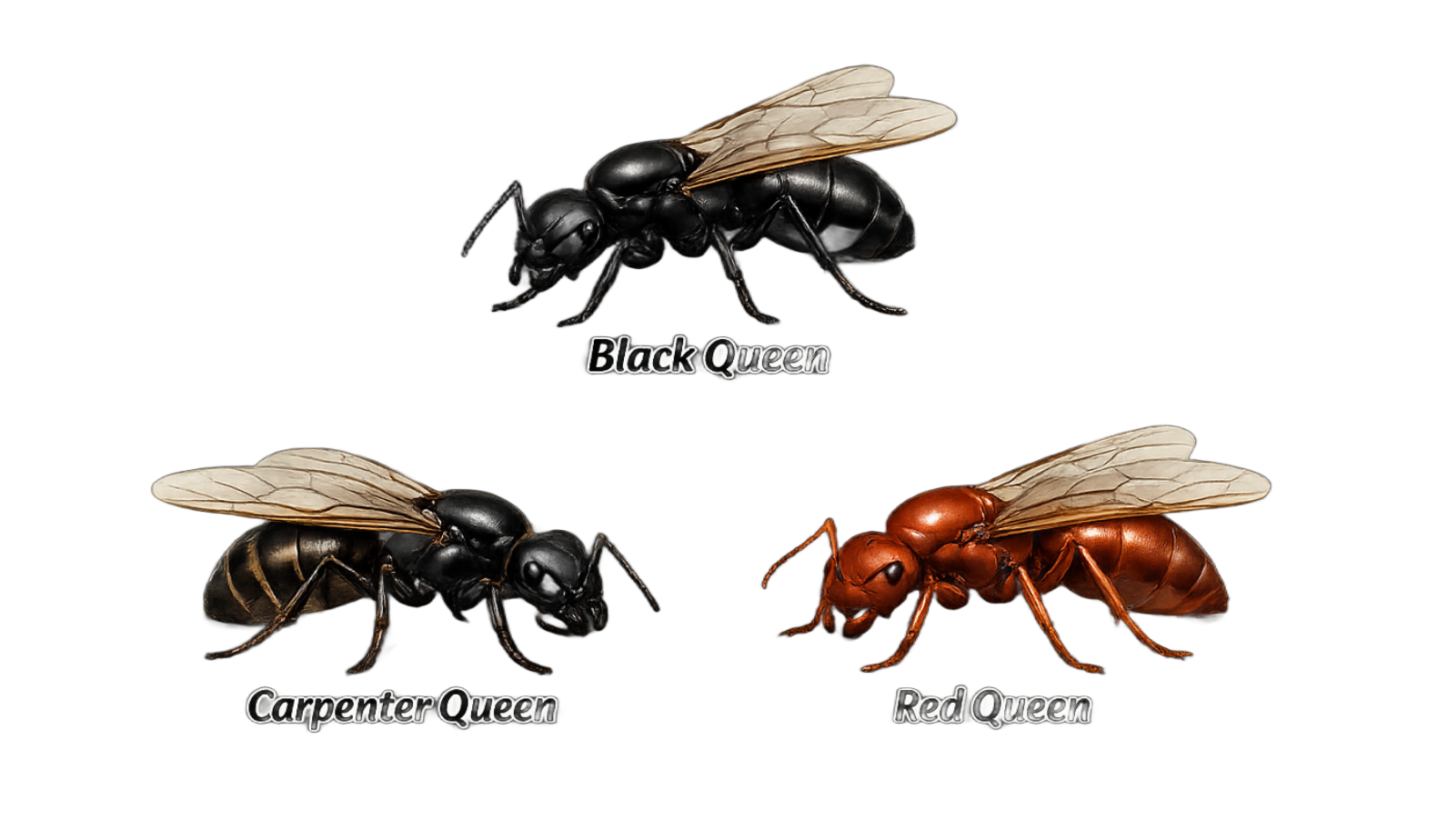
Black Ant Queen Facts
Black ant queens, commonly linked to odorous house ants or pavement ants, are usually modest in size but highly productive. They often build colonies near foundations, sidewalks, mulch, or wall voids. Once workers locate food indoors, the queen can continue producing new ants rapidly, leading to repeat kitchen and bathroom invasions.
Red Ant Queen Facts
Red ant queens are commonly associated with fire ants or aggressive outdoor species. They establish nests in soil, lawns, planter beds, and sunny areas around the property. These colonies can expand quickly, and workers are known for painful bites or stings when disturbed. A healthy queen can keep a colony active for years if left untreated.
Carpenter Ant Queen Facts
Carpenter ant queens are larger than most common household ant queens and are tied to wood-damaging colonies. They prefer damp or decaying wood, wall voids, attics, and structural areas with moisture issues. Unlike termites, they do not eat wood—they excavate it to build galleries. A carpenter ant queen can create a long-term structural pest problem if ignored.
Types of Ants Matter
Not all ants play by the same rules. Argentine ants are the most common in Westlake Village and form massive, stubborn colonies. Odorous house ants are the ones that show up indoors and seem to appear out of nowhere. Carpenter ants are less common but more serious—they don’t just visit, they start remodeling your wood structures. Each type requires a different approach, and guessing wrong is why most treatments fail.
Which ants can bite you?
Most household ants in Westlake Village are more annoying than dangerous, but some species can bite or sting when threatened. Carpenter ants can bite with strong jaws, while red ants and fire-ant-type species may sting and cause painful irritation. If you disturb a nest outdoors, ants can become surprisingly aggressive. The good news: proper identification tells you whether they’re a nuisance or a problem worth urgent treatment.
Are any ants "poisonous"?
Ants are not poisonous in the traditional sense, but some species can inject venom through stings or cause reactions through bites. Fire ants are the best-known example, creating painful welts and irritation. Most ants found around homes are not medically dangerous, but they can contaminate food, trigger discomfort, and create persistent infestations. In pest control terms, nuisance does not mean harmless.
Destroy the Ant Colony
Most DIY ant-killing sprays are useless.
They kill the ants you can see, but leave the colony untouched—so within days, more show up like nothing happened. In many cases, sprays actually make the problem worse by scattering the colony and forcing it to split into multiple nests, multiplying the issue instead of solving it.
With a proper treatment, you’ll usually notice activity drop within a few days. In some cases, you may briefly see more ants before you see none—that’s not a setback, it’s the system working. The ants are carrying the treatment back to the colony, and once it reaches the source, the entire operation shuts down.
1-time vs Recurring Ant Control
1-time Ant Removal Services.
Our one-time ant control service is ideal for sudden infestations, active trails, parties, guests arriving, or when ants have clearly crossed the line. We inspect the problem areas, treat active zones, and target the colony pressure around the home for fast relief. It’s a strong reset button when ants are currently winning.
Recurring Ant Removal
Recurring service is built for long-term prevention and peace of mind. We monitor activity, refresh protective barriers, and stay ahead of seasonal surges before colonies reestablish themselves. For homes with landscaping, irrigation, older construction, or repeat ant issues, recurring service is usually the smarter and more cost-effective option.
Get started