
Thousand Oaks Homeowner Cricket Guide 2026
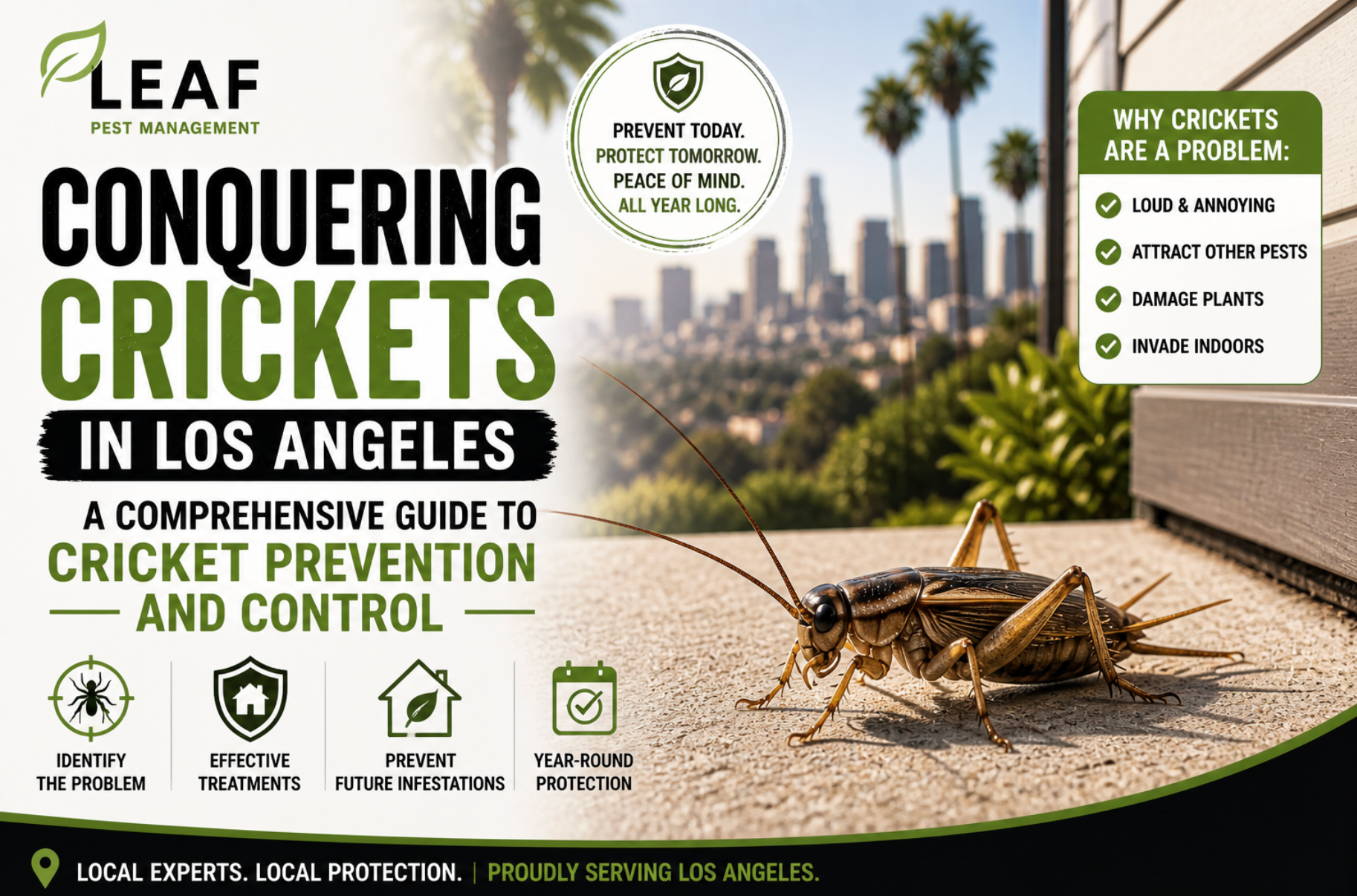
Introduction Summary: Homeowners in Thousand Oaks are familiar with occasional chirps on summer nights, but unchecked cricket populations can become a costly nuisance. There are roughly 900 species of crickets worldwide, and about 100 species live in the United States. In southern California’s Mediterranean climate, house crickets (Acheta domesticus) and field crickets often thrive outdoors but invade homes when temperatures cool or after irrigation increases moisture. Female house crickets may lay up to 400 eggs during a single breeding season, and a small population can mature in about three months. Because adult crickets are nocturnal and attracted to lights and dampness, they frequently congregate around Thousand Oaks’ irrigated lawns and well‑lit patios.
Know your Chirping Little Enemies: Cricket Species
| Species | Appearance & Behavior | Risks |
|---|---|---|
| House crickets (Acheta domesticus) | Light yellow‑brown with three dark bands across the head, about ¾–1 inch long. Nymphs look like adults but lack wings. Adults are nocturnal, congregate near lights and warm moisture sources, and lay eggs in moist soil or fabric. | Feed on fabrics, including wool, cotton, silk and synthetics. Heavy infestations leave chewed edges and roughened fibers. Loud nocturnal chirping disrupts sleep. |
| Field crickets (Gryllus spp.) | Usually black, ½–1¼ inches long. Attracted to light and often invade homes in fall. | Damage fabrics and occasionally field crops. |
| Camel/cave crickets (Ceuthophilus spp.) | Wingless, hump‑backed, tan‑to‑brown insects up to 1½ inches long. Prefer cool, damp basements and seldom chirp. | Primarily a nuisance; may damage upholstery and fabrics |
Health & Property Concerns
Crickets seldom transmit disease, but their feeding habits are destructive. They chew loose fibers from clothing, carpets and upholstery. Items stained with perspiration or food are especially attractive. Because house crickets can remain indoors indefinitely when conditions are suitable, infestations can lead to recurring fabric damage. Nocturnal chirping can disrupt sleep and reduce quality of life. Outdoors, crickets may feed on fruits and vegetables or become garden pests.
Signs of a Cricket Infestation
- Chirping sounds: Male crickets rub their wings together to attract females; continuous night‑time chirping signals an infestation.
- Physical sightings: Crickets hide in warm, dark areas like basements, crawl spaces, and behind appliances. They gather near lights on walls or patios.
- Fabric damage: Look for chewed edges or rough fibers on clothing and carpets.
- Eggs or nymphs: Females lay eggs in soil or moist fabric. Nymphs resemble small wingless adults.
Integrated Pest Management (IPM) Strategies
1. Eliminate Habitats
Crickets prefer dark, moist hiding places. Remove clutter such as piled bricks, stones, firewood and overgrown vegetation near the home. Maintaining a tidy yard and mowing lawn edges reduces harborage. Limit outdoor lighting or replace white lights with yellow insect‑repelling bulbs; yellow lights are less attractive to crickets. Outdoors, clear debris, mulch and leaf piles away from foundations.
2. Exclusion & Structural Repairs
Crickets enter through gaps in doors, windows and foundations. Weather‑strip and caulk cracks around doors, windows and masonry. Repair or install screens on windows and vents. Use fine mesh over crawl‑space vents to prevent entry. In Thousand Oaks, homeowners should also inspect for expansion joints or gaps created by earthquakes and seal them promptly.
3. Manage Moisture
Ventilate basements, crawl spaces and attics. Fix leaky pipes and irrigation systems; house crickets thrive in warm, moist environments. Provide adequate drainage around foundations. Inside, store clothes and fabrics in dry, sealed containers to deter feeding.
4. Indoor Controls
Vacuum regularly to remove eggs and adults, and dispose of vacuum bags outdoors. Sticky traps placed in basements or along walls capture camel crickets and other species. After killing crickets, remove dead insects to prevent attracting ants or beetles. Chemical treatments should be applied only in cracks and crevices and according to label directions; insecticides are temporary and may need re‑application.
5. Outdoor Treatments
If habitat reduction and exclusion aren’t enough, apply bait treatments or perimeter insecticide barriers around the home. Bait formulations placed between cricket habitats and the foundation are effective. Liquid insecticides should be applied to the soil extending one foot out from the foundation and one foot up the wall. Always select products labeled for crickets and follow safety precautions. Avoid spraying large exposed surfaces; targeted applications are more effective.
6. Professional Help
For persistent infestations or commercial properties, consult a licensed pest control professional. Experts can design a treatment plan tailored to your home and ensure compliance with California regulations. Professionals may employ integrated methods combining habitat modification, mechanical removal and targeted insecticides.
Living Peacefully with Crickets
Crickets play a role in ecosystems by consuming insects and organic debris, but they become pests when they invade living spaces. By understanding their habits and implementing integrated pest management, Thousand Oaks homeowners can prevent infestations and protect fabrics, furnishings, and sleep quality. If you hear the persistent chirp of unwanted guests, act quickly—simple measures like sealing entry points and reducing moisture often stop invasions before they become serious. For more information on cricket biology and management, explore these resources:
References: https://wpcdn.web.wsu.edu/wp-puyallup/uploads/sites/408/2015/02/PLS-42-Crickets-Prevention-and-Management.pdf, https://extension.missouri.edu/media/wysiwyg/Extensiondata/Pub/pdf/agguides/pests/g07366.pdf, https://www.pestworld.org/pest-guide/occasional-invaders/house-crickets/, https://www.terminix-triad.com/learning-center/crickets/, https://www.orkin.com/pests/crickets/house-crickets